JO1
JO1 proved that the survival-show machine could scale into a durable Japanese mainstream act without losing K-pop-style intensity. Formed through Produce 101 Japan and launched by Lapone Entertainment, the 11-member group debuted in 2020 and quickly turned TV momentum into chart results, commercial partnerships, and arena-level live business. That growth matters because JO1 did not arrive as a niche experiment. They were built to sit at the center of modern Japanese pop while borrowing the speed, training discipline, and international ambition associated with Korean idol systems.
The numbers back it up. JO1 stacked major domestic award wins early, kept building their discography through singles, albums, and digital releases, and reached Tokyo Dome scale with the JO1DER SHOW cycle. Official site updates in 2026 kept the pace moving with releases like EIEN and Breezy Love, showing a group still in expansion mode rather than legacy maintenance.
What makes JO1 important in a HITKULTR context is the bridge they represent. They are not simply a Japanese group with K-pop aesthetics. They sit inside a regional model that connects audition television, digital fandom, tour economics, and idol-pop globalization. That makes JO1 one of the clearest examples of how the Korean trainee system and Japan's domestic scale can produce a different kind of pop heavyweight.
Members
Gallery
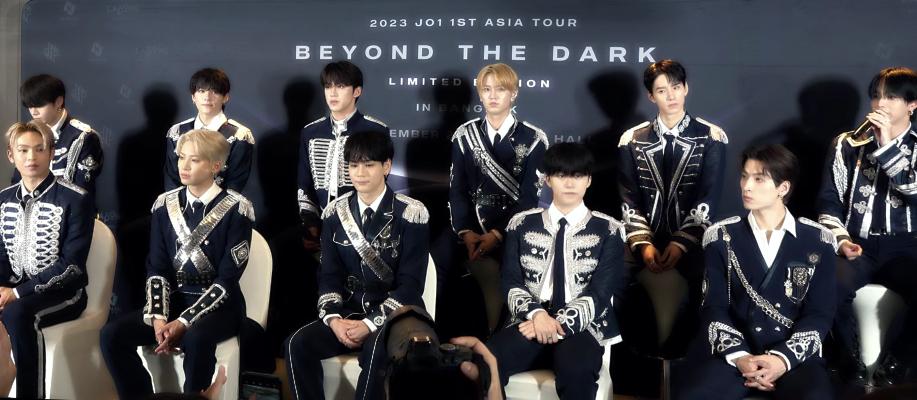
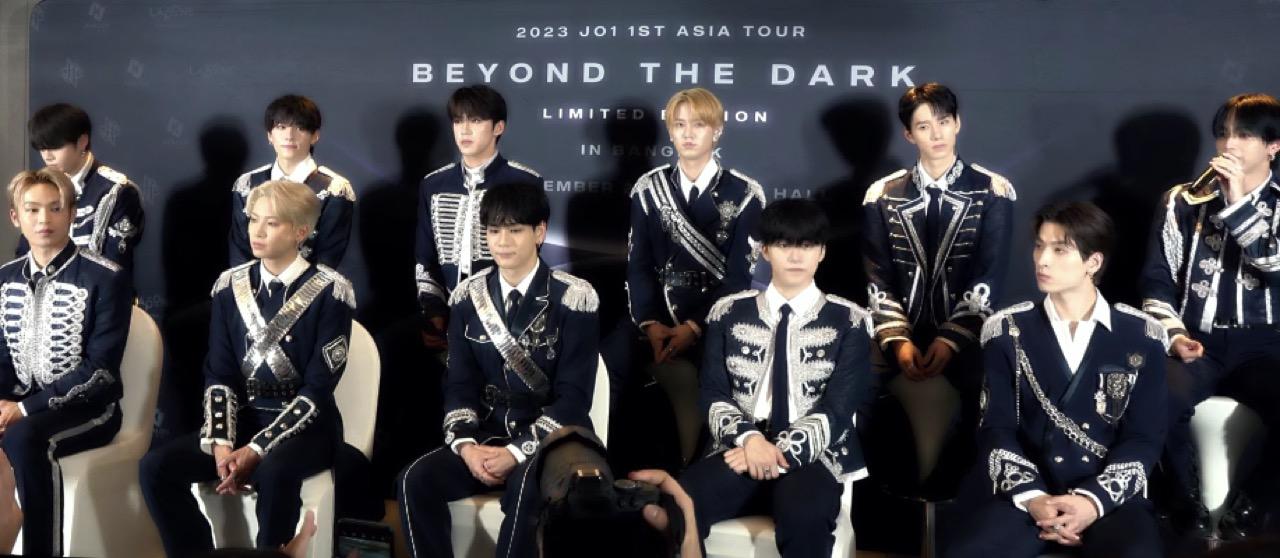
JO1 at Beyond The Dark Limited Edition press conference, Bangkok (Nov 2023). TH Headline / CC-BY