Share This Article
Hook Entertainment CEO Kwon Jin-young Gets Suspended Sentence for 4 Billion Won Embezzlement
Hook Entertainment CEO Kwon Jin-young received a suspended prison sentence for embezzling 4 billion won over 10 years. Here is what the verdict means for the agency and its artists.
April 7, 2026
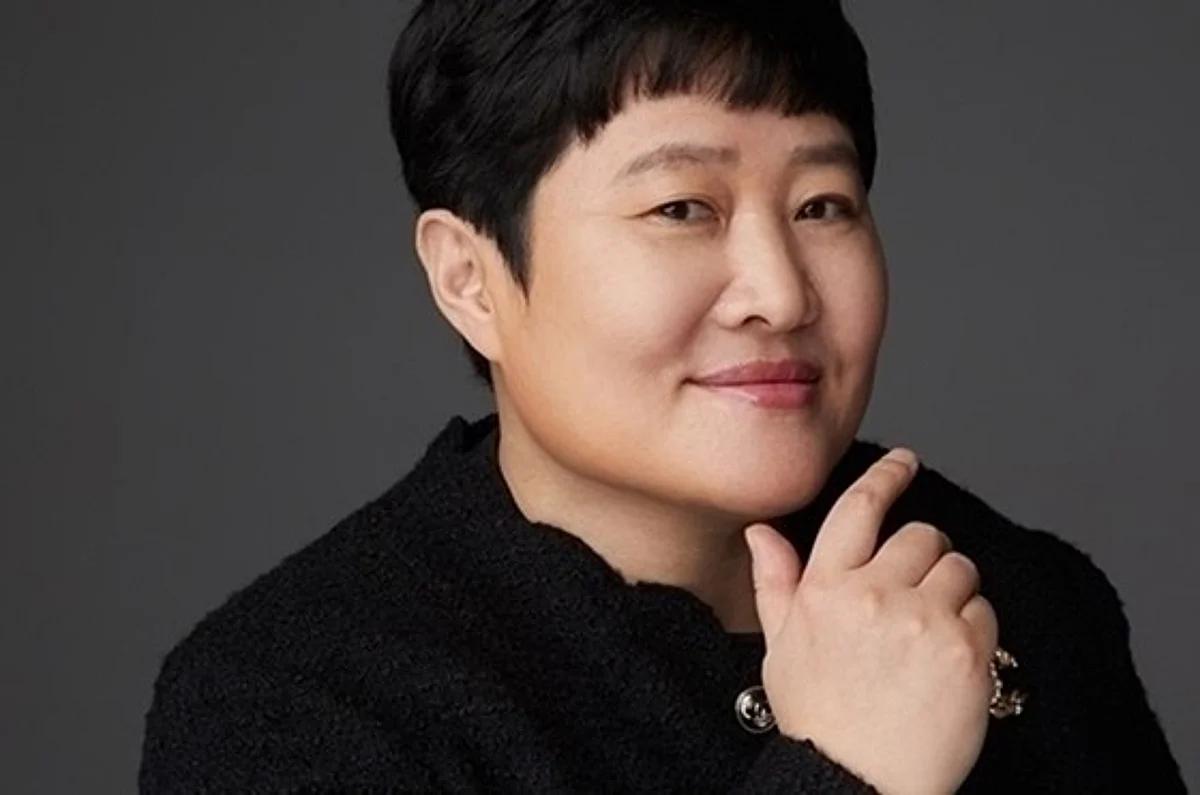
Hook Entertainment (훅엔터테인먼트) CEO Kwon Jin-young (권진영) received a two-year prison sentence, suspended for four years, on April 3, 2026, after being convicted of embezzling approximately 4 billion won ($2.65 million USD) in company funds over a decade. The ruling was handed down by the 12th Criminal Division of the Seoul Southern District Court under Presiding Judge Park Jong-ryeol, according to Chosun Ilbo's report on the verdict. Kwon was convicted on charges of embezzlement and breach of trust under South Korea's Act on the Aggravated Punishment of Specific Economic Crimes. According to Maeil Business Newspaper's court coverage, the personal spending at issue ranged from luxury shopping and family travel to furniture purchases and insurance premium payments. The court said the defendant admitted to all charges and fully remedied damages through repayment and court deposits, but still found that a decade-long diversion of company money could not be treated lightly.
For the K-entertainment industry, the case closes one chapter of the scandal that erupted in late 2022 when allegations surfaced that Hook had failed to pay music royalties to its biggest star. The verdict still leaves a bigger question hanging over the business: whether a suspended sentence is enough deterrence for financial abuse at Korea's talent agencies.
What Kwon Jin-young Was Convicted Of
Between 2012 and October 2022, as reported by Maeil Business Newspaper (MK), Kwon misappropriated approximately 4 billion won in Hook Entertainment funds for personal use over a span of ten years. The charges covered a wide range of personal expenditures: luxury shopping trips, corporate cards issued to family members and personal acquaintances, private travel expenses, furniture purchases, and insurance premium payments. The prosecution's case was initially triggered in part by a 2022 investigation by Dispatch, which uncovered approximately 2.6 billion won in misused corporate card spending over six years alone. That report led to a formal prosecution investigation, and Kwon was indicted in October 2025. Investigators then established the full picture of embezzlement going back to 2012. The court did not dispute the facts. Kwon admitted to the charges, and the court confirmed all damages have been fully remedied through either direct repayment or deposits with the court. The suspended sentence reflects that acknowledgment, though critics argue the outcome still favors the offender over the victims.
The court's statement was pointed: "Exercising control over a company to arbitrarily divert its assets for personal use is socially unacceptable and cannot be considered a minor offense. Even a one-person company can cause unexpected harm to others associated with it, requiring stricter management." The judge balanced that condemnation against the mitigating factors of full admission and complete financial remedy. Kwon now faces four years of probation. If convicted of any further offense during that period, the suspended sentence could be activated.
The Lee Seung-gi Scandal That Broke It Open
The embezzlement verdict is inseparable from the Lee Seung-gi (이승기) payment dispute that made headlines globally in late 2022. Lee had been one of Korea's most beloved multi-hyphenates since debuting in 2004 as a singer before crossing over into acting and variety shows. He spent 18 years with Hook. Then, in November 2022, he sent the agency a formal certification of contents requesting payment for music revenue he had never received. Dispatch had reported that Hook Entertainment had provided Lee with no music income statements for the five years between 2004 and 2009, and that royalties had been systematically withheld. Hook's CEO Kwon Jin-young issued a brief public apology and claimed to be fact-checking. What followed was months of legal escalation. By December 2022, Hook unilaterally transferred what it claimed was Lee's full settlement and simultaneously filed a lawsuit to confirm the absence of further debt, according to coverage by Soompi. Lee Seung-gi rejected that framing and filed his own lawsuit against the CEO and directors for embezzlement and fraud. The broader investigation that followed exposed not just the misappropriation of Lee's royalties, but the decade-long personal use of company funds that led directly to Thursday's verdict. Lee has since won multiple court victories against his former agency and rebuilt his career under new management.
Hook Entertainment's Current Artist Roster
While the CEO's legal situation has dominated headlines for over three years, Hook Entertainment still operates as a talent agency. Its current roster includes actress Park Min-young (박민영), a fixture in Korean romantic dramas known for hits including "What's Wrong with Secretary Kim" and "Her Private Life." Actor Lee Seo-jin (이서진) also remains on the roster, as do actors Seo Beom-jun and Choi Gyu-ri. Veteran singer Lee Sun-hee (이선희), one of Korea's most respected solo artists, is the agency's senior figure and previously served as executive director. According to Dispatch's 2023 investigation, Lee Sun-hee's family was among those who benefited from the overcharged agency fees at the heart of the case. None of the current artists have publicly commented on Thursday's verdict. The reputational damage to Hook from three years of scandal has been significant, and whether the suspended sentence allows the agency to stabilize or triggers further departures remains to be seen. Park Min-young, whose career trajectory has continued upward despite the controversy around her management, may face the most scrutiny as she balances association with the agency against the momentum of her own projects.
A Second Case Still Pending
Thursday's verdict is not the last of Kwon Jin-young's legal exposure. She is currently on a separate trial for allegedly obtaining illegal prescriptions for Zolpidem, a controlled sedative, through an employee in violation of South Korea's Narcotics Control Act. That case involves obtaining prescriptions through an intermediary rather than legitimate medical channels. No verdict has been issued in that matter as of April 4, 2026. The combination of financial crimes and a pending drug-related case paints a picture of a CEO whose conduct extended well beyond a single lapse of judgment. For Korea's entertainment industry, which has faced sustained scrutiny over governance standards at its talent agencies, the Hook case adds another data point to an ongoing conversation about accountability at the top of these companies. Whether the courts, or the industry itself, will move toward stricter standards remains the open question.