Share This Article
I'm Popo Wants to Put Korea's First Fully AI Feature on the Big Screen
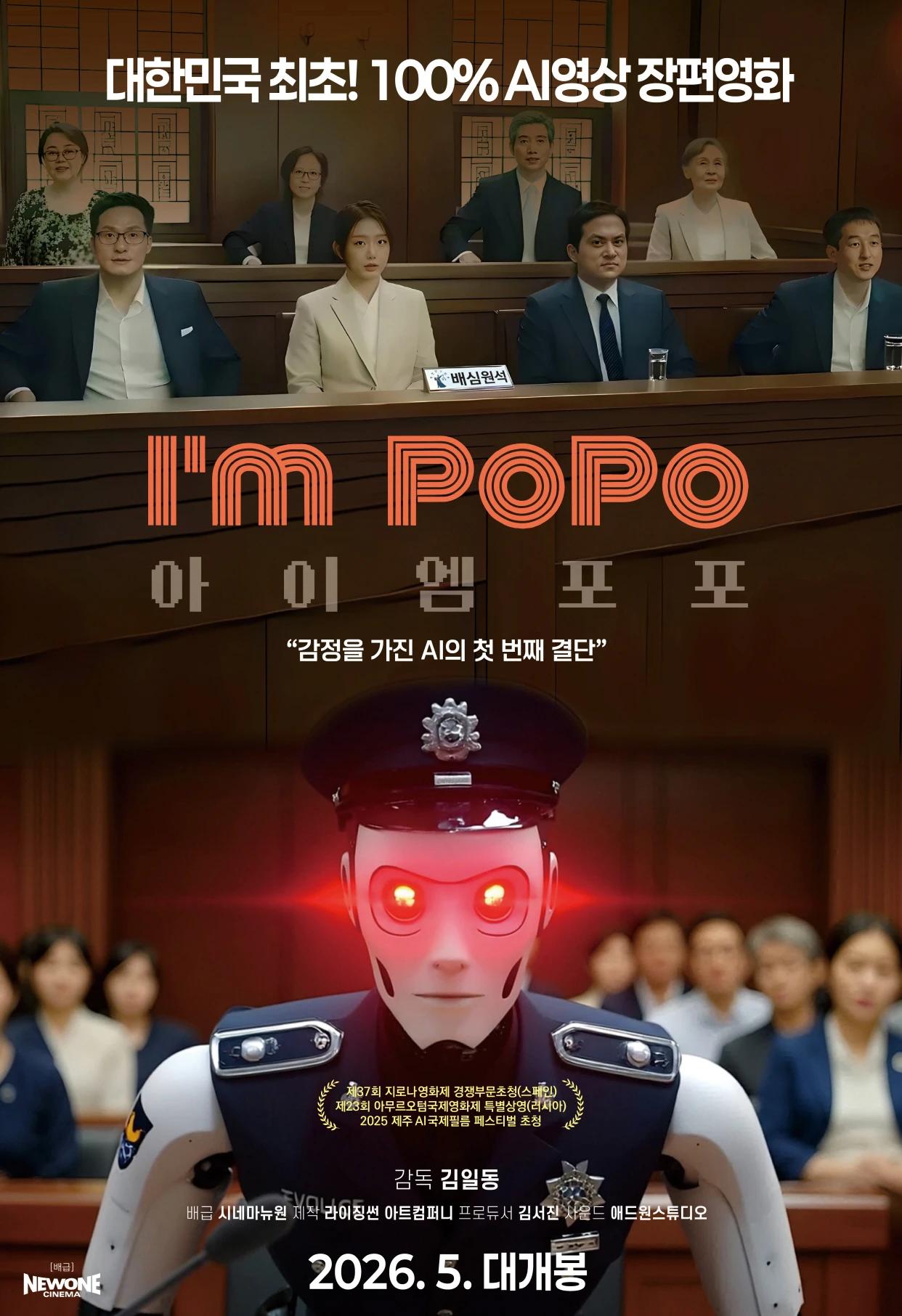
I'm Popo opens May 21 as South Korea's first feature marketed as fully generative-AI-made, turning Kim Il-dong's one-person workflow into a real theatrical test.
April 28, 2026
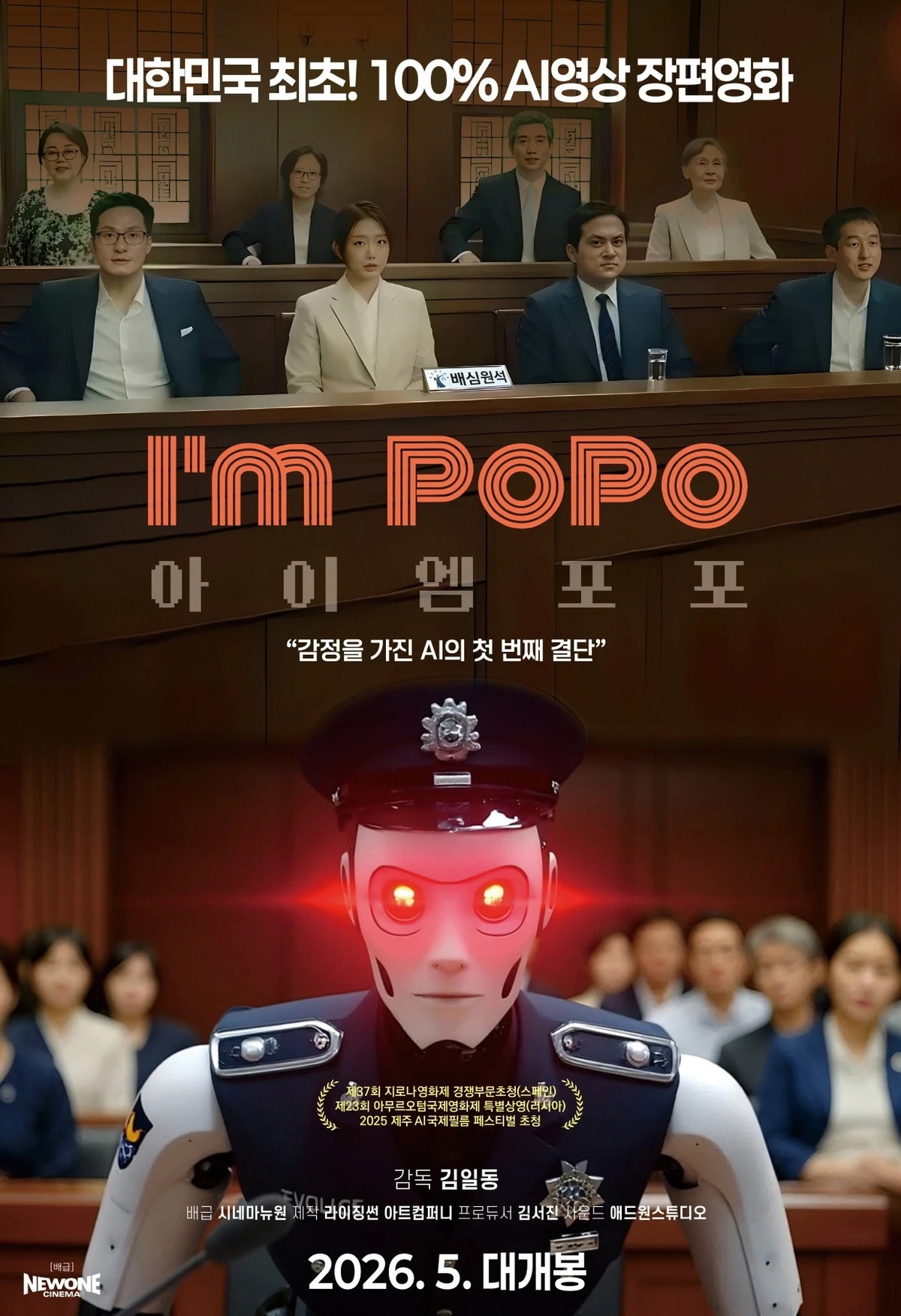
"I’m Popo" opens in South Korean theaters on May 21 as a 64-minute sci-fi courtroom drama that distributor Cinema Newone and multiple Korean outlets are presenting as the country’s first feature built entirely from generative AI visuals. According to Korea JoongAng Daily’s March 5 report, the film follows a robot created to protect people that ends up killing a potentially dangerous human. The same report says director Il-dong Kim, known for his Naver Webtoon work, handled development, character design, and background design through generative AI. Cinema Newone also said the film had already landed a special screening invitation from Russia's Amur Autumn festival before release. That makes the release more than a novelty. It turns a tech demo into a real box-office test for whether Korean audiences will pay to watch a feature where the core labor sits in prompting, scripting, and voice direction instead of a traditional set.
Il-dong Kim finished the film fast, but the real pitch is a one-person production model
Il-dong Kim completed "I’m Popo" in roughly two months without a traditional on-screen cast or crew, and that production story is the sharpest reason the film matters right now. According to The Korea Herald’s April 27 review-feature, professional voice actors handled the dialogue while Kim wrote the script and ran the prompts himself. The Korea Herald also quoted Kim saying he wanted the project to argue that a one-person film era has arrived, while Variety’s FilMart dispatch noted that the film was already drawing buyer attention once Cinema Newone picked it up for Korean distribution. That is a serious provocation for Korea’s independent film scene, where time, labor, and financing are constant choke points. If a feature can be assembled this quickly, even with visible limitations, the conversation shifts from whether AI cinema is respectable to whether the production math is simply too disruptive for smaller filmmakers to ignore.
The quality debate is already part of the marketing
"I’m Popo" is being sold as a breakthrough, but the early reporting makes clear that the film’s rough edges are not being hidden. The Korea Herald described a plastic sheen on faces, features that shift from shot to shot, and rapid cuts used to move past images that do not fully hold together. Asiae’s April 27 coverage, as surfaced in search results around the press event, similarly framed the film as an ambitious first step rather than a finished replacement for conventional theatrical craft. That honesty may actually help the release. It positions the movie less as a solved answer and more as a public stress test for where AI filmmaking stands in Korea today. We have already seen adjacent pressure hit other Korean creative sectors in our recent look at Korean webtoons entering their AI era, where the real story was labor logic as much as software capability.
Korean cinema’s global attention makes this experiment bigger than one niche release
Korean film no longer moves like a local-only business, so even a modest AI feature can punch above its commercial size once the symbolism lands. According to Korea JoongAng Daily, Cinema Newone said "I’m Popo" had already been invited to the 23rd International Film and Theater Festival Amur Autumn in Russia for a special screening before opening day. Variety added that the film had also screened at Spain’s Girona Film Festival and that Amur Autumn screenings sold out, while the same report said the project took the grand prize at the Korea AI Content Awards. That matters because Korean cinema already has a live global exhibition circuit and a global audience that pays attention when the country tests new production models. My read is simple: viewers may not love this movie, but they are going to remember what it represents. If "I’m Popo" lands even as an imperfect curiosity, Korea’s next wave of low-budget filmmakers will treat it as permission to experiment instead of waiting for cleaner tools.