Share This Article
Korean Webtoons Are Entering Their AI Era. Naver's Piracy Fight Shows Why It Matters
Korean webtoons are being reshaped by AI-assisted workflow, sharper anti-piracy economics, and Instagram-driven distribution pressure. This is where the business is moving now.
April 26, 2026
Korean webtoons are entering an AI-led industry reset, not because creators suddenly fell in love with automation, but because the business math is changing fast. According to Seoul Economic Daily's Apr. 25 report on the Apr. 24 IP Convergence Industry Association forum in Seoul, creators and executives now see AI as a practical production layer for plagiarism checks, fact verification, and workflow speed. At the same time, Seoul Economic Daily reported that Naver Webtoon's Toon Radar system has already cut fast piracy leaks and lifted paid revenue. Add Chosun English's finding that Instagram webtoons have overtaken Kakao Webtoon in reader rankings, and the real story is bigger than one shiny tool. Korea's comic business is being pulled toward smarter creation, harder monetization defense, and a new fight over where readers actually spend their time.
We already saw how webtoon IP reshaped streaming in our earlier look at 2026's adaptation boom. This week shifts the lens back to the industry itself. The pressure points are now workflow, piracy, and distribution. That mix matters more than another single casting update because it tells us how the next wave of webtoon hits, and the next frustrations around them, are likely to be made.
AI Is Moving From Industry Anxiety to Daily Workflow
AI is no longer a fringe talking point in Korean webtoons. It is becoming production infrastructure. According to Seoul Economic Daily's forum coverage, speakers argued that treating AI as taboo now makes less sense than deciding where it belongs in a creator's workflow and what guardrails should come with it. One creator on the panel said he uses AI for plagiarism checks and factual verification, not for replacing the act of storytelling itself, which is a far more grounded use case than the panic scenario fans usually imagine. That distinction matters. In practice, the early Korean webtoon AI conversation is less about pushing a button to generate a hit series and more about reducing research time, catching avoidable errors, and helping solo creators compete with studio-scale output. As reported by Seoul Economic Daily, the unresolved issue is trust: creators want productivity gains without weaker rights protection or a flood of low-quality copycat work.
That is where the debate gets real. If AI stays in the support lane, it can ease a brutal release schedule for artists who already work at serial speed. If it slips into cheap content farming, readers will feel it immediately. We have already seen how quickly fan communities turn when they sense corners are being cut, and Reddit threads about AI-generated webtoon art show the trust gap is not theoretical.
Piracy Enforcement Is Starting to Look Like Revenue Strategy
Naver Webtoon's anti-piracy push now looks less like back-office cleanup and more like a direct monetization lever. According to Seoul Economic Daily's Apr. 22 report, the company's Q1 2026 Toon Radar data showed the number of titles leaked to illegal sites within 24 hours of a paid episode release fell by about 90% by the end of the quarter. The same report said paid revenue across affected titles rose by an average of 23%, with some works climbing as much as 60%. Those are the kind of numbers that change executive behavior fast. They also explain why the AI discussion cannot be separated from business results. In Korean webtoons, machine learning is not just being pitched as a creative assistant. It is also being used to slow piracy, protect release windows, and keep more readers inside the paid ecosystem where the money actually lands.
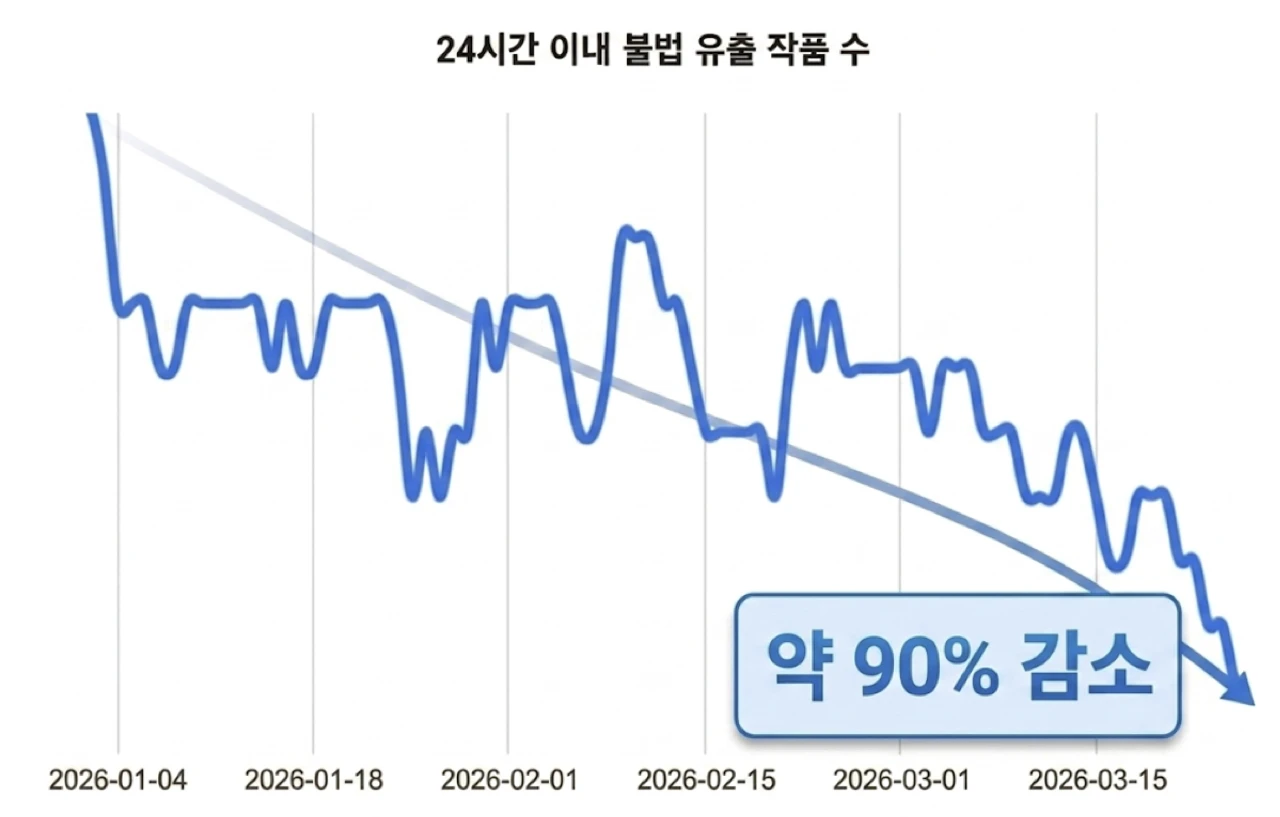
The bigger takeaway is not that piracy disappears. It is that delay matters. If a leak window stretches even a little, more users convert before free copies spread. That dynamic has been obvious to readers for years, but now platforms have fresh internal data to justify a heavier spend on detection tools, takedowns, and account tracing. For fans who want better originals and steadier release schedules, that money flow matters more than the technical branding around the system.
Instagram Webtoons Are Exposing Reader Fatigue With Legacy Apps
Korea's platform shift is not only about AI. It is also about where readers are choosing to spend attention. As reported by Chosun English on Apr. 23, Instagram accounted for 23.9% in a Korea Creative Content Agency survey of most-used webtoon services, ahead of Kakao Webtoon at 21%, while Naver Webtoon still led at 81.4% and KakaoPage held 44%. The point is not that Instagram suddenly replaced the majors. The point is that social distribution is now credible enough to pull both readers and creators away from old habits. Chosun also reported growing fatigue around formula-driven genres, rising per-episode costs, and platform rules that can limit schedule flexibility or panel structure. For creators, Instatoons promise audience-building and brand control. For readers, they promise speed, variety, and free entry.
That social-first shift lines up with a broader mobile entertainment pattern. We have already seen vertical storytelling take off in Korea's micro-drama boom, where short-form structure is part of the appeal, not a compromise. Webtoons are now running into the same market logic. If a platform feels rigid and expensive, users will test lighter formats somewhere else.
Why Fans Should Care About the Industry, Not Just the Titles
This matters because the industry mechanics show up in the reading experience faster than most fans realize. Better workflow tools can mean fewer mistakes and more sustainable schedules. Stronger anti-piracy systems can protect the revenue that funds long-running series. Social-style distribution can widen discovery, but it can also intensify the race for attention and make the market feel even noisier. The upside is a more flexible ecosystem. The risk is a split one, with premium platform comics on one side and a flood of disposable short-form content on the other. That is why this moment feels bigger than a niche creator-tech story. It will shape which comics break out, which creators can afford to stay independent, and which properties become the next adaptation pipeline for articles like our coverage of Romance 101's K-drama move.
The smartest move for the Korean webtoon business now is not choosing between AI, anti-piracy enforcement, or social distribution. It is figuring out how to balance all three without torching reader trust. The global storefront is still visible through WEBTOON's English platform, but the more interesting story is happening under the hood. Korea's webtoon market is being rebuilt around efficiency, monetization defense, and platform fluidity at the same time. Readers will feel the results long before the industry settles on a clean narrative for what this era is supposed to be.