
Share This Article
Jennie Made 23.8 Billion Won Through OA. The Solo-Label Case Is Real.
Jennie took 23.8 billion won from OA Entertainment in two years, giving K-pop a hard number for what a top solo label can generate outside the major agency system.
May 11, 2026
Jennie has now taken 23.8 billion won, about $16.3 million, in settlement payments from her own company OA Entertainment across 2024 and 2025, turning the post Big 4 solo-label experiment into a hard business case, according to Financial Supervisory Service filing coverage from Korea JoongAng Daily and Seoul Economic Daily. The OA structure matters because Jennie still works with BLACKPINK through YG Entertainment while controlling her solo music, ads, performances, and appearances through Odd Atelier, the company she founded in late 2023. Korea JoongAng Daily reported that OA paid her 14.3 billion won in 2024 and about 9.5 billion won in 2025, while Seoul Economic Daily said the company itself posted 18.9 billion won in revenue in 2024 and 23.8 billion won in 2025. For an industry that spent years insisting scale only lived inside giant agencies, these numbers read like proof that a top-tier idol can now keep far more of the machine in house.
That matters because OA's financial shape looks more deliberate than celebrity fans might expect. According to Seoul Economic Daily, Jennie owns 100 percent of Odd Atelier and her mother serves as chief executive, while Korea JoongAng Daily's filing-based report showed the company paying her more than 23 billion won across two years without relying on full-group BLACKPINK promotions. In plain terms, OA is functioning like a focused operating company for solo music, ads, appearances, and brand work, not a decorative label name parked on top of fame. That distinction matters for the wider K-pop business conversation. If a top-tier artist can keep group activity with YG Entertainment while building a separate solo engine that already clears annual revenue above 20 billion won, then independence is no longer a branding fantasy. It is a revenue model other stars, investors, and agencies now have to take seriously.
OA looks like a real company, not a prestige shell
Odd Atelier looks more convincing because the financial story is not just about Jennie pulling cash out. According to Seoul Economic Daily, OA generated 18.9 billion won in revenue and 580 million won in operating profit in 2024, then lifted revenue another 26 percent to 23.8 billion won in 2025 even as operating profit eased to 390 million won. Korea JoongAng Daily also reported that Jennie extended about 2.86 billion won in shareholder loans to the company by the end of 2025, which suggests she is still funding growth and smoothing cash flow rather than simply harvesting a quick payout. That makes this story bigger than a headline number. It suggests OA is being run as an active business that can absorb expansion costs, support staff, and keep building around Jennie's schedule instead of behaving like a paper entity built only for tax optics.
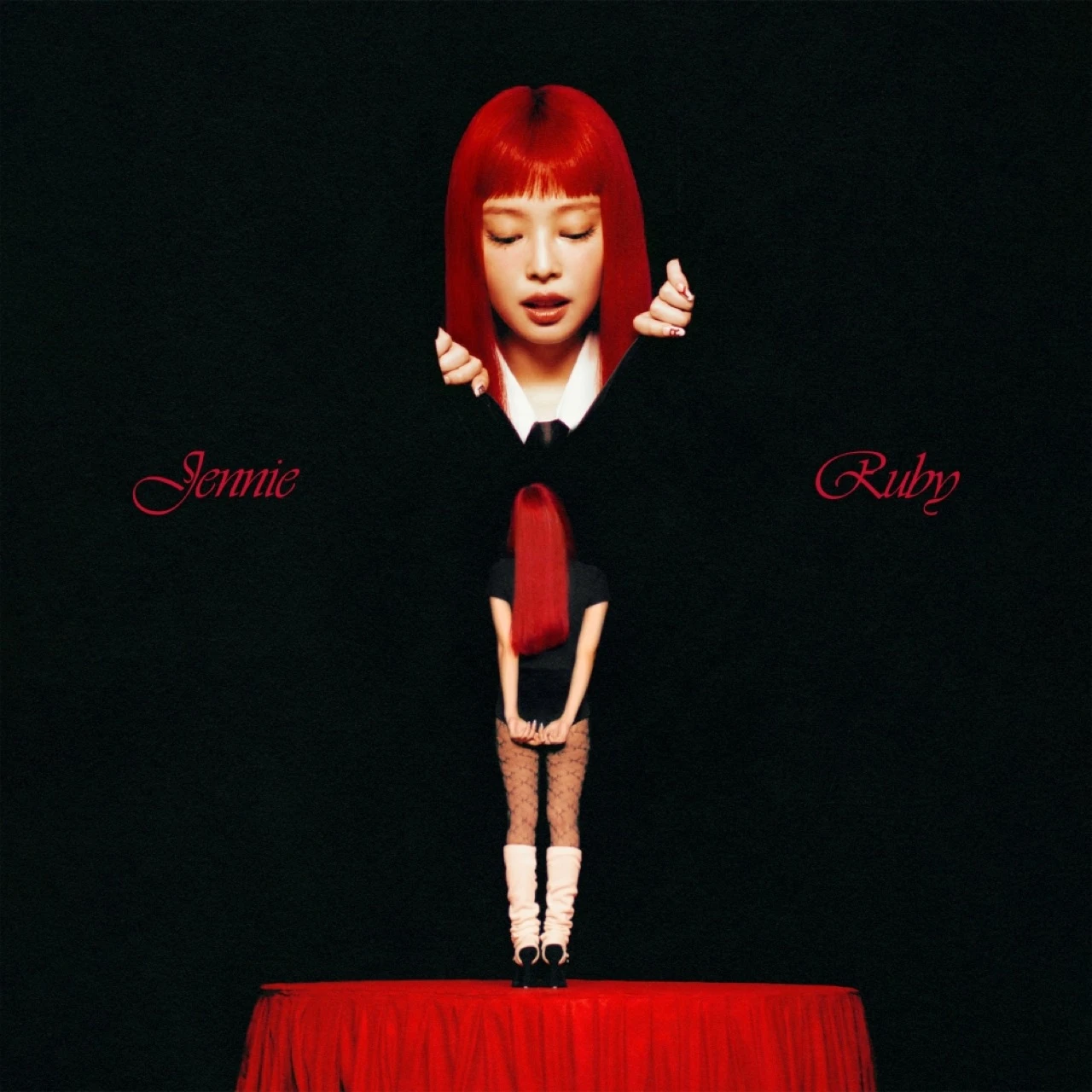
The timeline matters too. When Jennie introduced Odd Atelier in December 2023 after resetting her individual contract structure, the conversation was mostly about whether she wanted freedom, fashion range, or a cleaner way to run solo work. Now we have the answer in numbers. According to filing-based reports from Korea JoongAng Daily and Seoul Economic Daily, OA did not just give her aesthetic control. It gave her an infrastructure that could immediately monetize music, endorsements, appearances, and live demand at a scale most idols never get near. Seoul Economic Daily also tied that stretch to OA's 23.8 billion won revenue line in 2025, which makes the company look less like a temporary holding structure and more like a fast-scaling operating business. Korea JoongAng Daily's filing-based coverage also linked that scale to a business mix spanning solo music, brand work, appearances, and live activity rather than one isolated revenue spike.
This changes the solo label conversation around BLACKPINK
Jennie's OA results also sharpen the broader BLACKPINK solo conversation because they show how much value can sit outside the traditional agency split once a member already has global recognition. We have already seen Jennie stack cultural influence through her TIME100 moment, and, as reported by JoySauce's Ruby chart coverage, her solo release cycle could still move serious sales and Billboard attention through her own label structure. Pair that with BLACKPINK's group-scale momentum, and OA starts to look like something more strategic than a celebrity side office. Korea JoongAng Daily's filing-based report also showed OA paying Jennie across two straight years while BLACKPINK group work stayed outside the company, which is exactly why the model looks so consequential. It looks like a model where YG keeps the group engine, while Jennie keeps a much tighter grip on the value created by everything that happens around her individual name.
That does not mean every idol can copy this. Jennie had the audience, the partnerships, and the leverage to make independence work fast. But it does mean the old assumption that stars need a major agency to keep global scale alive looks weaker than it did even a year ago. OA is still young, and the operating profit line shows growth is not frictionless. Even so, a 23.8 billion won payout over two years is not soft evidence. It is the kind of number that will make every top-tier contract negotiation in K-pop feel a little different.