Share This Article
Jeonju Film Fest Opens 2026 With Sung-ki Ahn Tribute
Jeonju Film Fest 2026 opened with 237 films, 78 world premieres, and a moving Sung-ki Ahn tribute, giving Korean cinema one of its sharpest cultural pulse checks of the year.
May 1, 2026
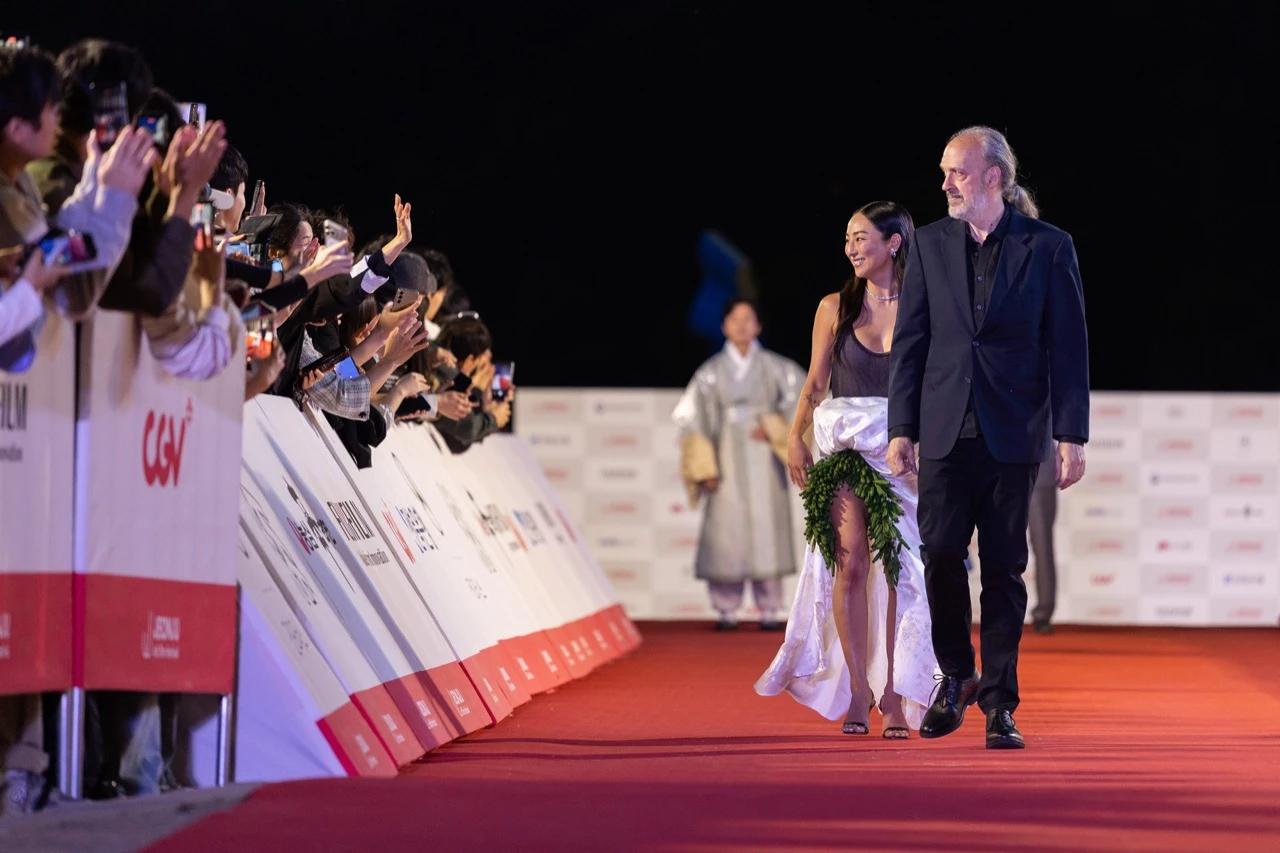
Jeonju International Film Festival (전주국제영화제) opened its 27th edition on April 29 with 237 films from 54 countries, 78 world premieres, and a special achievement tribute to late screen legend Sung-ki Ahn (안성기), according to the festival's official opening-night release, plus opening-day coverage from Yonhap. The 10-day run, which continues through May 8 across five venues in Jeonju, opened with Kent Jones' Late Fame and a ceremony where Philip Ahn accepted the award for his father. This is not just another festival opener. It feels like a temperature check on where Korean cinema stands in 2026. At a moment when the local industry is still leaning on policy support and audience-recovery measures, Jeonju is once again doing the harder cultural work of proving that Korean film still has range, risk appetite, and a global conversation around it.
Jeonju Film Festival 2026 opens with scale that still means something
Jeonju Film Festival 2026 is screening 237 films from 54 countries, with 140 international titles and 78 world premieres according to the festival's official release and Yonhap's opening-day coverage. That scale is what keeps Jeonju locked into its long-held role as Korea's most important indie and arthouse showcase, not just a regional stop with good branding. It matters even more now because the commercial side of Korean film is still fighting for stable attendance, investment confidence, and post-pandemic rhythm. We just saw fresh policy support from the Ministry of Culture, Sports and Tourism in our recent look at Korea's film-revival plan, but funding alone does not rebuild creative prestige. Jeonju does the other half of the work. It gives discovery, formal risk, and international curation a public stage, while reminding buyers and audiences that Korean cinema still has depth beyond the blockbuster export conversation.
The Sung-ki Ahn tribute gave the opening real emotional weight
The most resonant part of opening night was the festival's posthumous tribute to Sung-ki Ahn, with his son Philip Ahn accepting a special achievement award on his behalf, according to the festival's official release and Yonhap. Yonhap also confirmed that Jeonju built a special program around lesser-known works from Ahn's six-decade career, which is exactly the right move for a festival that has always sold itself on curation over noise. Ahn is not just a nostalgia figure. He is one of the faces that made Korean cinema legible across generations, long before the global rush around Parasite and before Chan-wook Park's rise to Cannes-history status in our recent coverage of his jury presidency. Jeonju honoring him at the front door of the festival was a reminder that Korean cinema's future still depends on how seriously it treats its own canon.
Why Late Fame and the closing documentary sharpen Jeonju's identity
Kent Jones' Late Fame opened the festival, while Hyun-ji Kim's closing documentary arrives under two English title renderings, Namtaeryeong in Yonhap's report and The Longest Night: Namtaeryeong in The Korea Herald's version. That programming split says plenty about Jeonju's taste. According to Yonhap, Late Fame follows a poet whose long-forgotten work gets rediscovered by younger admirers, and the film already arrived with Venice prestige behind it before landing in Jeonju's opener slot. According to The Korea Herald, the closer documents the late-December 2024 standoff between protesting farmers and police at Seoul's Namtaeryeong pass. Screen Daily's festival preview also framed this year's lineup as a larger, more ambitious edition than 2025, which makes that opener-closer pairing feel even more deliberate. One pick looks inward at aging, memory, and artistic afterlife. The other looks straight at contemporary political friction. That is a strong Jeonju thesis in one sentence: arthouse cinema still gets to be intimate and confrontational in the same week.
What to watch as Jeonju runs through May 8
Watch whether Jeonju's strong opener translates into wider conversation around Korean independent film, not just festival-bubble praise. According to the festival's official venue guide, screenings are spread across five venues including CGV Jeonjugosa and Megabox Jeonju Gaeksa, which gives the event real citywide visibility instead of boutique isolation. Just as important, Jeonju's scale this year shows there is still international appetite for serious Korean screen conversation beyond blockbuster export headlines, especially with buyers, programmers, and local audiences all moving through the city until May 8. Screen Daily's April festival preview also noted that the lineup is up by 13 titles year over year, a useful sign that Jeonju is still expanding rather than merely holding ground. You can already see that festival-to-career bridge in our look at Hongjoong's Jeonju debut, which turned the event into a launch signal rather than just another screening berth. If Jeonju lands this year, it will not be because one gala looked glamorous. It will be because the festival again proved Korean cinema still knows how to balance memory, discovery, risk, and the kind of civic energy that keeps an arthouse event culturally central.