Share This Article
Buldak Coachella Return Shows K-Food Moving Like Festival Infrastructure
Samyang Foods brought Buldak back to Coachella 2026 as the festival's official ramen and hot sauce partner, extending Korean food culture into a repeatable on-site activation.
April 19, 2026
Samyang Foods' Buldak returned to Coachella for 2026 as the festival's official ramen and hot sauce partner, turning a Korean spice brand into a venue-wide food activation across both April weekends in Indio. According to Samyang's April 2 PRNewswire announcement, the activation runs April 10 to 12 and April 17 to 19, while Coachella's official Eat & Drink guide confirms the Buldak Crawl is part of the festival's on-site 2026 food map. That matters because Buldak is no longer appearing as a novelty import or a niche K-food flex. It is operating like a fully integrated festival advertiser built for tasting, posting, and repeat discovery in real time. As reported by Samyang and confirmed by Coachella's own event guide, this is a full festival-level partnership, not a side activation parked outside the main cultural conversation.
Buldak turned Coachella's food map into a brand experience
Coachella's official Eat & Drink guide says Buldak is returning in 2026 by turning exclusive food collaborations into a festival-wide challenge, with participating vendors including Rokstar Chicken, Prince Street Pizza, Sumo Dog, Birrieria San Marcos, and Sidekicks. As reported by The Korea Herald, the event is built around the "Buldak Crawl," which pushes festivalgoers to move booth to booth and sample limited menu items rather than queue at one branded pop-up. That is the smarter play. Buldak is using Coachella less like a sponsorship logo wall and more like a behavior engine, one designed to make discovery, heat tolerance, and short-form content feel like part of the same ritual. For a brand born from challenge culture, that format feels extremely on brand.
The menu strategy shows how K-food is scaling past the bowl
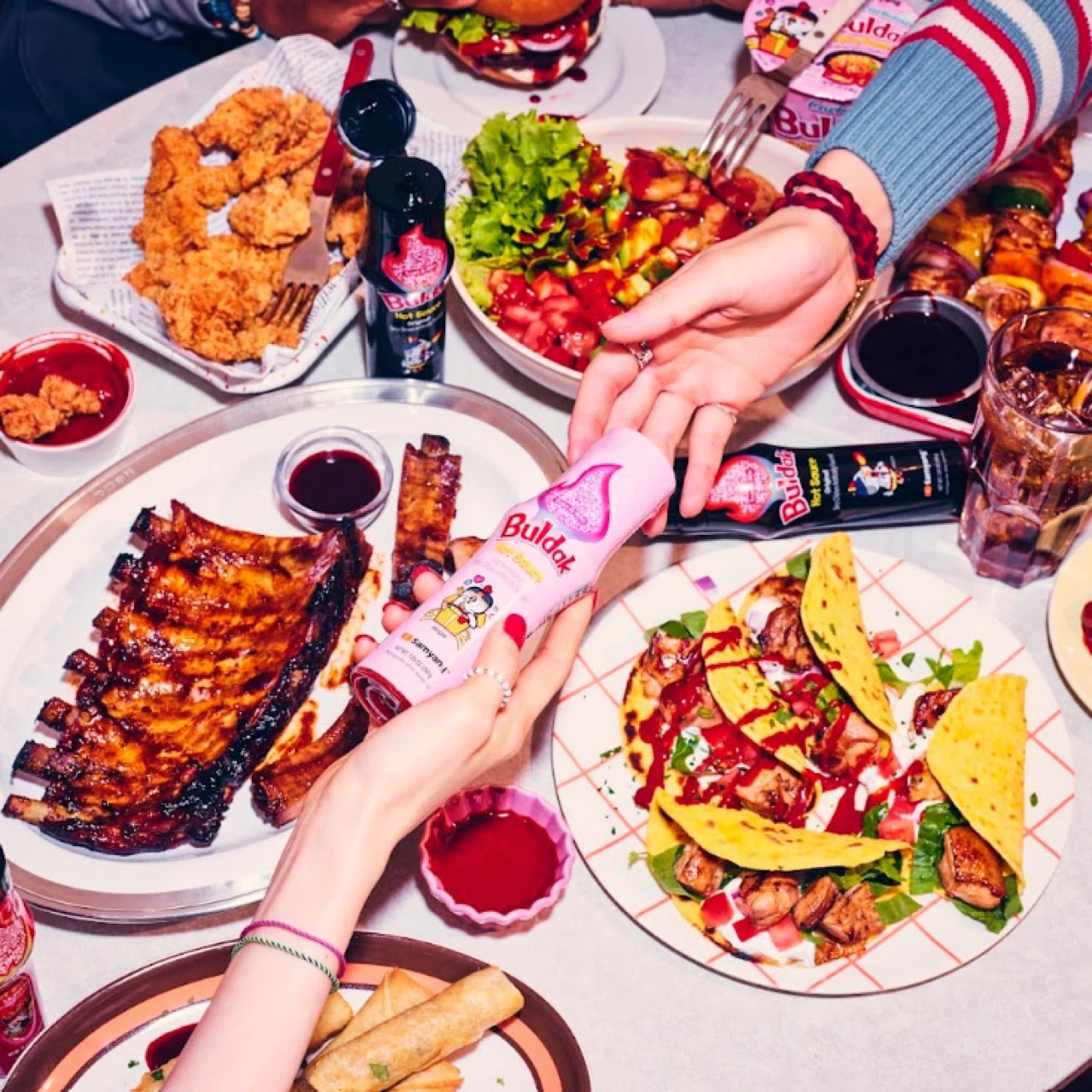
Samyang is also being explicit about what this activation is supposed to prove. According to Samyang's PRNewswire announcement, the company designed the Buldak Crawl to highlight not only its noodles but the flexibility of Buldak sauce across different foods, while Coachella's vendor list confirms participating stops including Prince Street Pizza, Rokstar Chicken, Sumo Dog, Birrieria San Marcos, and Sidekicks. In other words, Buldak is selling format freedom. The goal is to make its heat portable across American festival eating habits instead of asking consumers to meet the product only on Korean instant noodle terms. That is how a Korean food brand graduates from virality to infrastructure. Once the sauce works on pizza, fries, hot dogs, and dessert inside one of the world's most photographed festivals, the brand starts to look less like a trend and more like a category system.
Buldak arrived in a Coachella year already loaded with Asian crossover energy
Buldak's return also lands in a broader Coachella cycle where Korean and Asian presence is already unusually visible. JoySauce's Coachella 2026 preview framed this year's lineup around major Asian and Asian diaspora acts including BIGBANG, KATSEYE, Taemin, and BINI, which helps explain why a Korean food activation feels culturally aligned instead of random. HITKULTR has already tracked that wider crossover in our Taemin Coachella coverage and our report on Medicube's Coachella play with Lisa. Buldak now sits in that same lane, where Korean brands are not waiting for celebrity endorsement to authorize their relevance. They are building on-site experiences that can travel through fandom, food culture, and lifestyle media at the same time.
Why this matters for Korean consumer culture
Buldak helped define internet-era Korean spice culture long before this Coachella run, from challenge videos to mukbang eating-show clips that fueled global discovery. The 2026 festival activation, confirmed by Samyang's PRNewswire announcement, shows how that earlier virality is being translated into mainstream event marketing with clear American localization. We are watching K-food move into the same premium visibility tier that K-beauty and K-pop have been building for years. Coachella is useful here because it compresses music, fashion, social content, and consumer trial into one high-speed environment. If Buldak can win there for a second straight year, the takeaway is bigger than one hot sauce stunt. Korean lifestyle brands are learning how to own physical space inside Western tentpole events, and they are doing it without sanding off what made them culturally specific in the first place. The repeat booking matters because American festivalgoers are being asked to experience Buldak as a category staple, not as a one-season novelty from the international aisle.