Share This Article
BTS' Jungkook becomes the first Korean singer featured in a U.S. children's book series
Jungkook is set to appear in Capstone's 2026 Brain Candy Books lineup, making him the first Korean singer featured in the U.S. educational series.
May 6, 2026
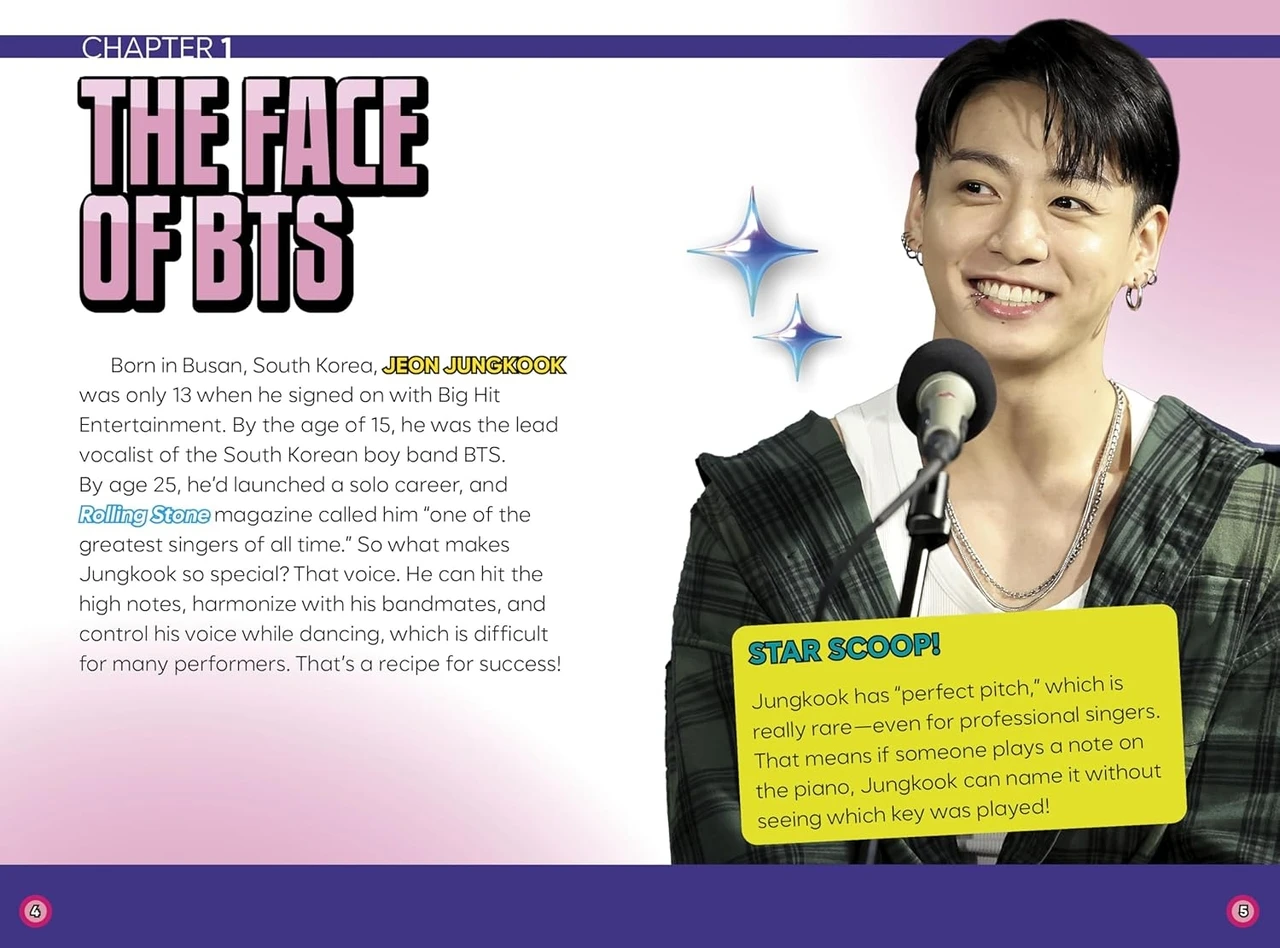
Jungkook (전정국) of BTS is part of Capstone's 2026 Brain Candy Books lineup, a U.S. youth nonfiction program aimed at elementary school readers and built for fast, visual classroom reading. According to Capstone's Brain Candy overview, the line is designed to meet kids who live inside short-form media with stats, quizzes, photos, and punchy page design, while The Korea Herald reported that Jungkook is the first Korean singer selected for the series. That is why this hits harder than a novelty publishing note. Capstone is not framing him as a fan-only collectible. The publisher and The Korea Herald both position him as a mainstream cultural figure who belongs in a classroom-friendly format built to explain why certain names matter to young readers right now. That is a very different kind of validation from a chart win or luxury campaign because it puts him inside a reading habit, not just a fandom moment.
Brain Candy Books is built for young readers, not fan service
Capstone is not pitching Brain Candy Books like a dusty celebrity biography line. On its Brain Candy page, the publisher says the books are visual, punchy, trendy, and surprising, and that they are designed to help kids who are hooked on short-form media rebuild reading stamina one curiosity hit at a time. According to Capstone, the broader strategy is to turn reluctant readers into repeat readers through stats, quizzes, crafts, and fast-moving nonfiction. That matters because Jungkook is not being treated as a niche K-pop exception. He is being framed as a recognizable pop-culture reference point for American readers who may know him from TikTok clips, the "Seven" era, or the wider ARIRANG era rollout. His inclusion says U.S. youth publishing now sees K-pop's biggest names as standard cultural vocabulary, not specialist material that needs extra explanation.
The book's pitch tracks with Jungkook's actual career arc
The content focus works because Jungkook's career already fits the clean shape of a youth profile. According to The Korea Herald, the book will cover his childhood, musical rise, and personal philosophy, while Capstone's 2026 lineup places him beside globally recognizable figures like Dua Lipa, Selena Gomez, and Cristiano Ronaldo. That gives young readers a straightforward entry point into why Jungkook matters without asking them to decode a decade of fandom lore first. The Korea Herald also said the book highlights milestones including seven solo Billboard Hot 100 entries and his 2022 FIFA World Cup opening ceremony performance of “Dreamers.” The same report noted that Capstone previously used the series to spotlight names such as Taylor Swift, Ariana Grande, Billie Eilish, and Lionel Messi, which makes Jungkook's placement look mainstream in school and library lanes. We have already tracked that broader Western expansion through his Calvin Klein campaign and his Hublot ambassadorship. The book simply moves that visibility from fashion and streaming into the education aisle.
Why this U.S. classroom moment matters
This is bigger than a cute fandom first because American youth publishing usually trails real cultural change instead of predicting it. By the time an educational series decides an artist belongs in front of elementary readers, that artist has already crossed out of trend status and into baseline relevance. That is the real flex. Jungkook is no longer just being licensed into campaigns, playlists, or luxury capsules. He is being framed as someone kids can learn about in a school-safe format. According to Capstone's Brain Candy page, the line is built to keep young readers turning pages with browsable facts and interactive elements, and The Korea Herald echoed that classroom-friendly positioning in its May 6 report on Jungkook's selection. Once an artist enters that lane, the conversation changes from novelty to permanence. For BTS, that is another sign their reach now extends beyond pop culture into how American kids are taught cultural literacy itself.