Share This Article
i-dle is using We made to turn 2026 momentum into a summer power play
i-dle returns on July 6 with We made, a ninth mini album that looks less like a routine comeback and more like a calculated summer momentum play.
June 10, 2026
i-dle is returning with its ninth mini album We made on July 6 at 6 p.m. KST, a date the group confirmed at midnight on June 8 KST as the next major checkpoint in its 2026 campaign. According to Soompi's June 9 update, the rollout now includes a full promotion scheduler, which means this is already operating like a tightly staged album era rather than a one-poster comeback notice. That distinction matters. After a year built on tour headlines, a January single, and another round of proof that the group still scales globally, We made feels like CUBE Entertainment and i-dle trying to turn scattered momentum into a cleaner summer narrative. We are not looking at a filler release. We are looking at a comeback designed to make the group's 2026 story feel deliberate again.
We made matters because i-dle is reconnecting its album identity on purpose
We made matters because the title itself extends one of the group's longest-running internal ideas. Korean coverage from Edaily and Sports Kyunghyang framed the new mini album as a deliberate echo of earlier titles like I am, I made, and We are, which gives the release more narrative weight than a generic summer comeback. That kind of continuity has always been part of i-dle's advantage, especially when the group is operating through strong concept authorship and a public identity shaped heavily by Jeon Soyeon's taste for world-building. The timing helps too. Edaily reported that this is the first new release in roughly six months since Mono (Feat. skaiwater) and the first mini album in about one year and two months since We are. Instead of reading like a quick reset, We made reads like the next organized chapter in a series the group clearly wants fans to follow album by album.
The teaser strategy is selling sensation before it sells songs
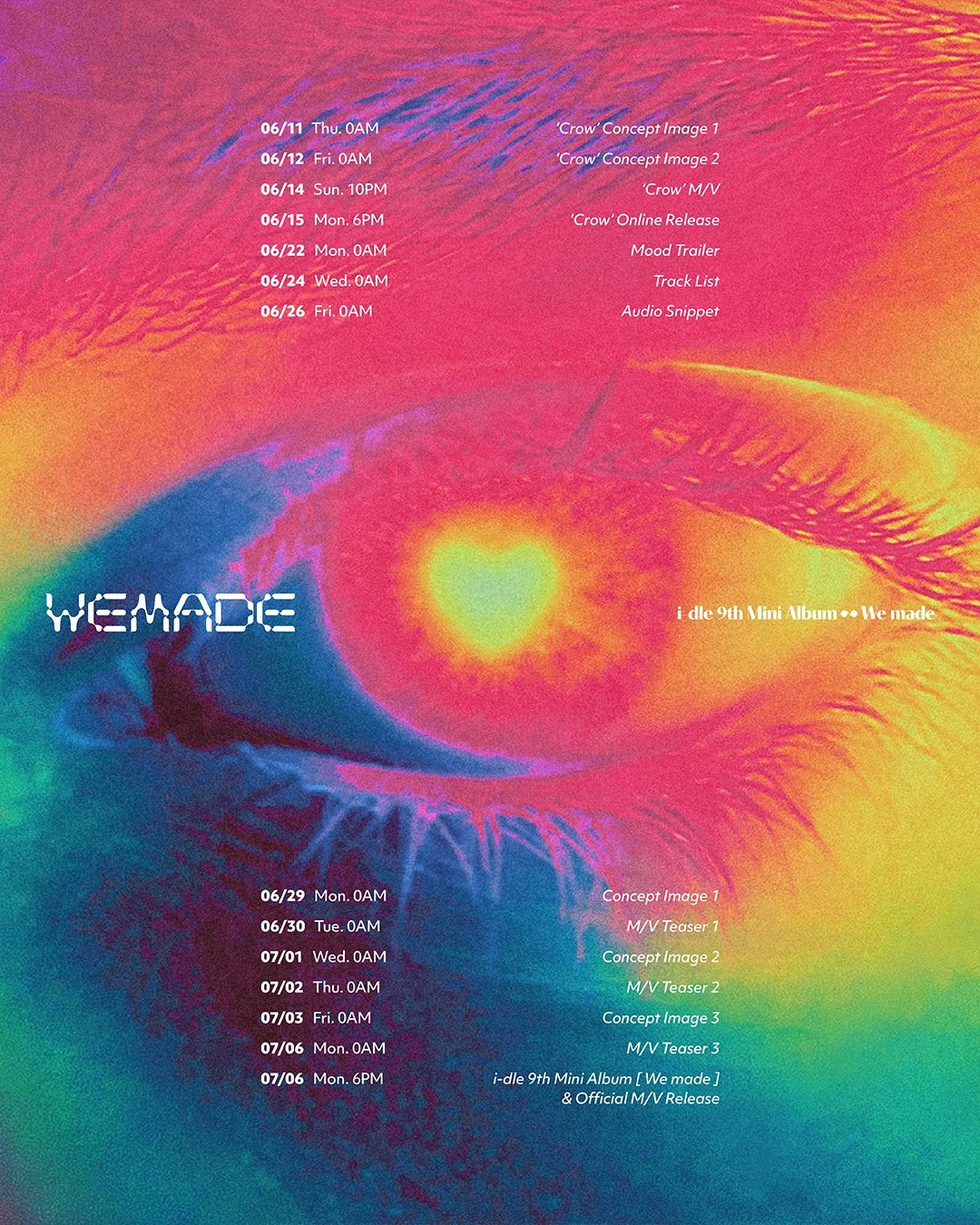
The teaser strategy is already clear: i-dle is selling physical sensation before it starts selling individual tracks. Edaily said the first visual used thermal-camera and X-ray concepts to show how love moves through the body, from the heart to the fingertips to the inside of another person's head. Sports Kyunghyang described the same concept as a way of waking up the feeling of intense love rather than simply teasing a mood board. That is a smarter setup than the usual comeback-poster shuffle because it gives the group an instantly recognizable visual language before fans hear a chorus. It also leaves room for escalation in the scheduler, which includes concept images, a mood trailer, a track list, audio snippets, and multiple MV teasers across June and early July. If the songs hit, the campaign will look carefully layered. If they miss, the concept will still have done real branding work first.
The bigger play is momentum conversion, not just another release-week spike
The bigger play is momentum conversion. i-dle is heading into We made after a stretch that already included the group's 2026 arena-tour push, a Japan-facing step with "HIDE AND SEEK", and another proof-of-scale moment when Yuqi hit a milestone that we covered in Tencent Music's 2026 Women of the Year story. The group also picked up fresh prestige with its Forbes 30 Under 30 Asia nod. As reported by MK, preorders for We made opened on June 8 in three versions, which is another sign that CUBE is trying to convert attention into album buying behavior early instead of waiting for title-track week. This is what disciplined top-tier group management looks like when it is trying to make every headline feed the next one.
Our take
i-dle does not need We made to prove it can trend for 48 hours. It needs We made to make the group's 2026 run feel connected, and right now the rollout looks built for exactly that. The cleanest clue is not the release date itself. It is the sequencing around it: tour stops in Singapore, Yokohama, and Hong Kong before the drop, a visual concept with enough bite to cut through busy summer release traffic, and a preorder plan that already extends into three physical versions according to MK. We also like that this comeback still feels legible to the broader K-pop conversation instead of disappearing into fandom-only shorthand. Spaces like The Kpopcast have long treated top-tier K-pop acts as long-arc catalog artists, not just week-to-week chart fodder, and We made looks positioned for that kind of reading. If i-dle lands the music, this stops being a simple July comeback and starts looking like the sharpest strategic reset of its year.