Share This Article
Japan's Anti-War Protests Are Borrowing K-Pop's Songs and Light Sticks
Japan's anti-war protests are using K-pop songs, penlights, and fandom-style participation cues to bring younger demonstrators into the country's biggest anti-war rallies in decades.
May 11, 2026
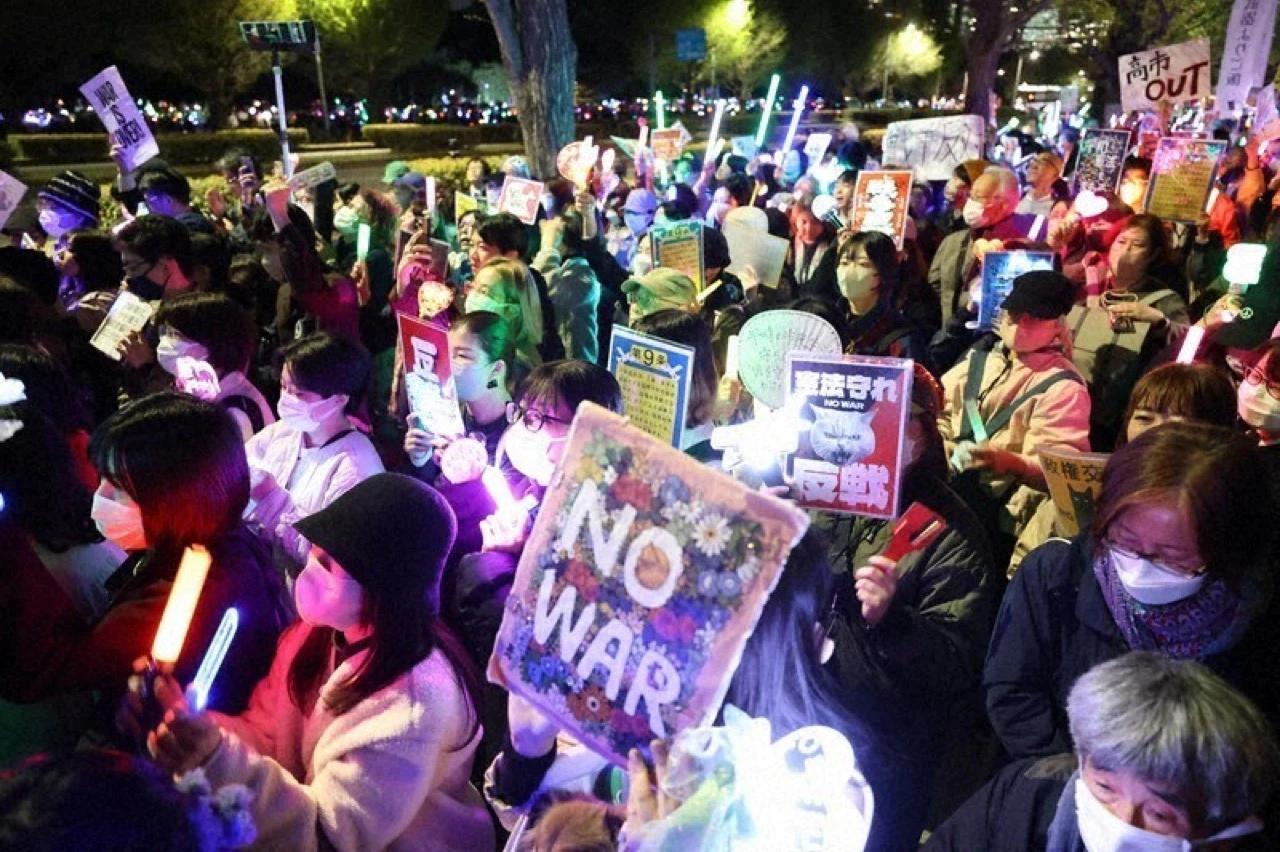
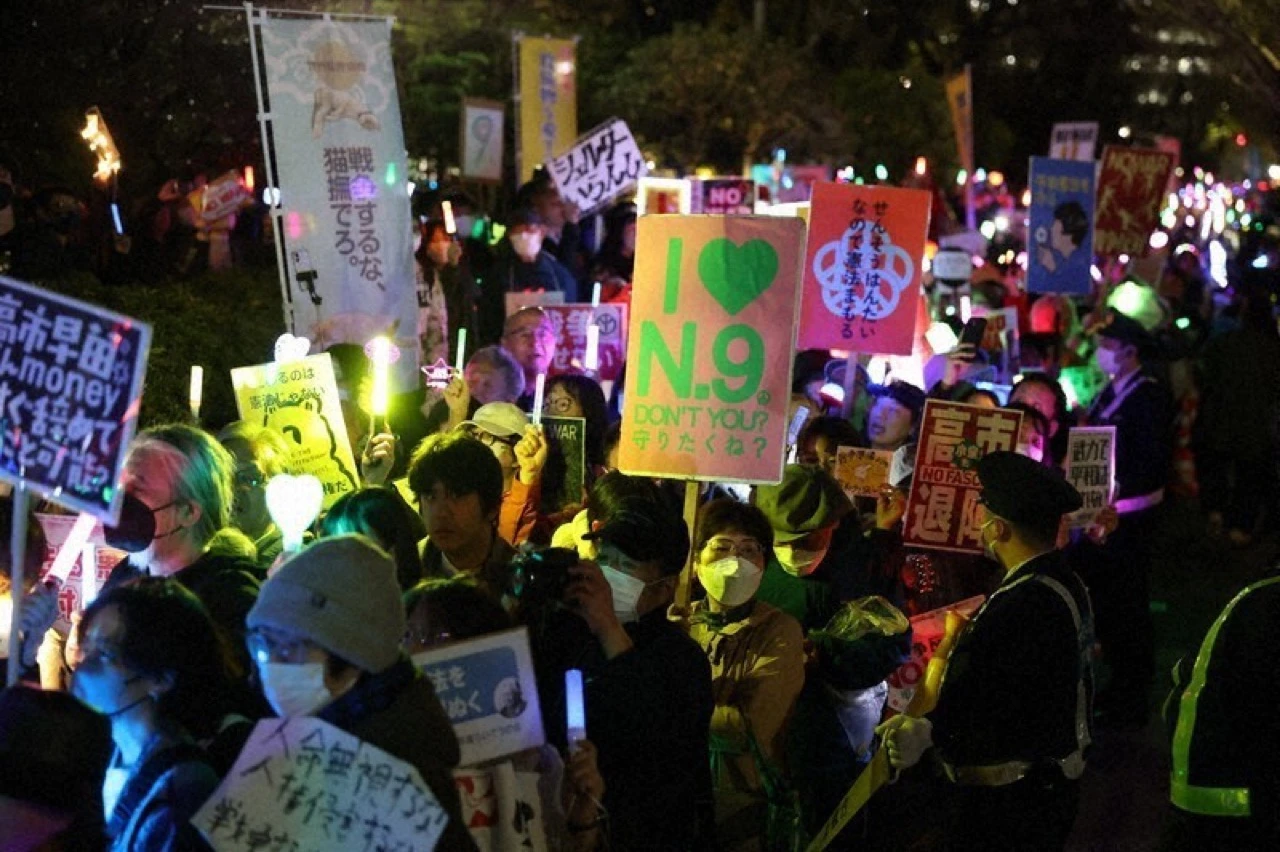
Japan’s anti-war protests are borrowing K-pop songs and light-stick culture as younger demonstrators in Tokyo and Osaka turn constitution rallies into lower-pressure, fan-event-style gatherings. According to The Guardian, organizers counted about 50,000 people at the 3 May rally at Tokyo’s Rinkai Disaster Prevention Park, and Mainichi said the music-and-penlight format is making rallies feel less intimidating for first-time participants. The details are what made the event feel culturally new: chants mapped onto KARA (카라)’s "Mister," protesters moving to aespa (에스파)’s "Whiplash," and concert light sticks, the glowing fan wands borrowed from fandom culture, turning up where megaphones once dominated. This matters because Japan is not just seeing bigger demonstrations. It is seeing a new participation language, one that makes protest feel less like marching in formation and more like showing up with social codes younger people already understand from fandom.
That shift is bigger than a playlist gimmick. Japan has long carried a social stigma around loud, confrontational street protest, so the more interesting story is how K-pop aesthetics soften the entry point. As reported by Mainichi, light sticks make a crowd look coordinated without making it feel militarized. Familiar hooks give chants rhythm without asking first-time attendees to memorize activist jargon. We have seen Korean pop culture export style, beauty, and tourism cues across Asia for years, and HITKULTR already mapped that wider soft-power reach in our look at K-pop owning the global conversation. What is new here is that it is exporting protest usability too. We have already seen adjacent design language in our coverage of Gyeongbokgung's Palace Light Stick, where fandom-coded objects were already being reframed for public cultural use.
K-pop is lowering the barrier to protest participation
According to Mainichi, about 30,000 people joined the 8 April protest outside Japan’s Diet building, up from about 3,600 at the first 27 February rally, while coordinated protests were held at 137 other locations nationwide. That growth matters because the organizers were not describing a hardened activist base. They were describing people who normally stay home. The Korea Times reported that younger attendees described the light sticks as lowering the barrier to joining, while Mainichi confirmed that the crowd was waving concert light sticks and included many first-time participants. This is the part political analysts can miss if they only track attendance. K-pop is functioning here like user-interface design. It strips away some of the social friction around protest and replaces it with cues that feel legible, playful, and collective.
These songs already carried protest memory before they crossed the border
The song choices are not random. According to The Korea Times, Japanese protesters used KARA’s "Mister" for chants against Sanae Takaichi’s government and aespa’s "Whiplash" during April rallies, but the deeper symbol is Girls’ Generation (소녀시대)’s "Into the New World" (다시 만난 세계). That track already had political memory in Korea after students at Ewha Womans University sang it during a 2016 campus occupation, and The Korea Times noted that it has since become a staple at Japanese demonstrations too. Mainichi added another crucial detail: one organizer explicitly compared Japan’s protest culture with South Korea and Taiwan. So this is not just fandom drift. It is a regional transfer of civic style, where a song that once signaled collective resolve in Korea now helps Japanese protesters make public dissent look less intimidating and more participatory.
Japan’s rallies now show how far K-culture travels
BBC News described the current wave as Japan’s largest anti-war protests in decades, with demonstrations spreading beyond Tokyo to Osaka, Kyoto, and Fukuoka. That scale tells you this is not a niche subculture stunt. It is a live example of Korean pop culture becoming practical social infrastructure abroad. We have already seen that logic in softer spaces, including our coverage of Gyeongbokgung’s Palace Light Stick, where fandom design turned heritage into something more immediately usable and collectible. Institutions like The Korea Society have spent decades building cultural fluency between Korea and US audiences, but Japan’s current protests show a different level of absorption. K-culture is no longer just being watched, streamed, or merchandised. BBC News also tied the demonstrations to anxiety over constitutional revision and military expansion, which gives the K-pop element a much heavier political frame. It is being repurposed as a civic toolkit.
That is why these images of penlights and K-pop hooks matter beyond this news cycle. As Mainichi and BBC News make clear, these rallies are scaling because younger demonstrators can read the atmosphere instantly. They suggest that Korean entertainment has become one of the region’s most portable public languages, one flexible enough to move from concert arenas into constitutional politics without losing its emotional clarity. If the barrier to protest in Japan has really been lowered, K-pop did not just provide a soundtrack. It helped redesign the room.