Share This Article
Kang Hye-won's Japanese Drama Debut in Gimbap and Onigiri Is Her Full-Circle Moment
Former IZ*ONE member Kang Hye-won leads the Netflix and TV Tokyo romance drama Gimbap and Onigiri, with aespa and NCT WISH on the soundtrack. Here's why the show works.
March 21, 2026
Kang Hye-won (강혜원) is the lead of Gimbap and Onigiri (キンパとおにぎり; Korean title: 첫입에 반하다), the TV Tokyo and Netflix romance drama that premiered January 12, 2026, per Netflix's official show listing. The 10-episode series marks her first lead role in a Japanese production and the most significant career move she has made since IZ*ONE disbanded in April 2021. Going by the reaction from audiences in Japan, Korea, and across Southeast Asia on Netflix, the gamble paid off. For a former K-pop idol whose Japanese fluency was built during two and a half years of cross-border promotional activity as part of IZ*ONE, landing a lead role in a bilingual Japanese network drama five years after disbandment is not luck. It is what long-term preparation finally cashing in looks like. Her co-star Eiji Akaso confirmed at the Seoul press conference that he was genuinely surprised by her level of fluency on set.
A Cross-Cultural Love Story Built Around Food
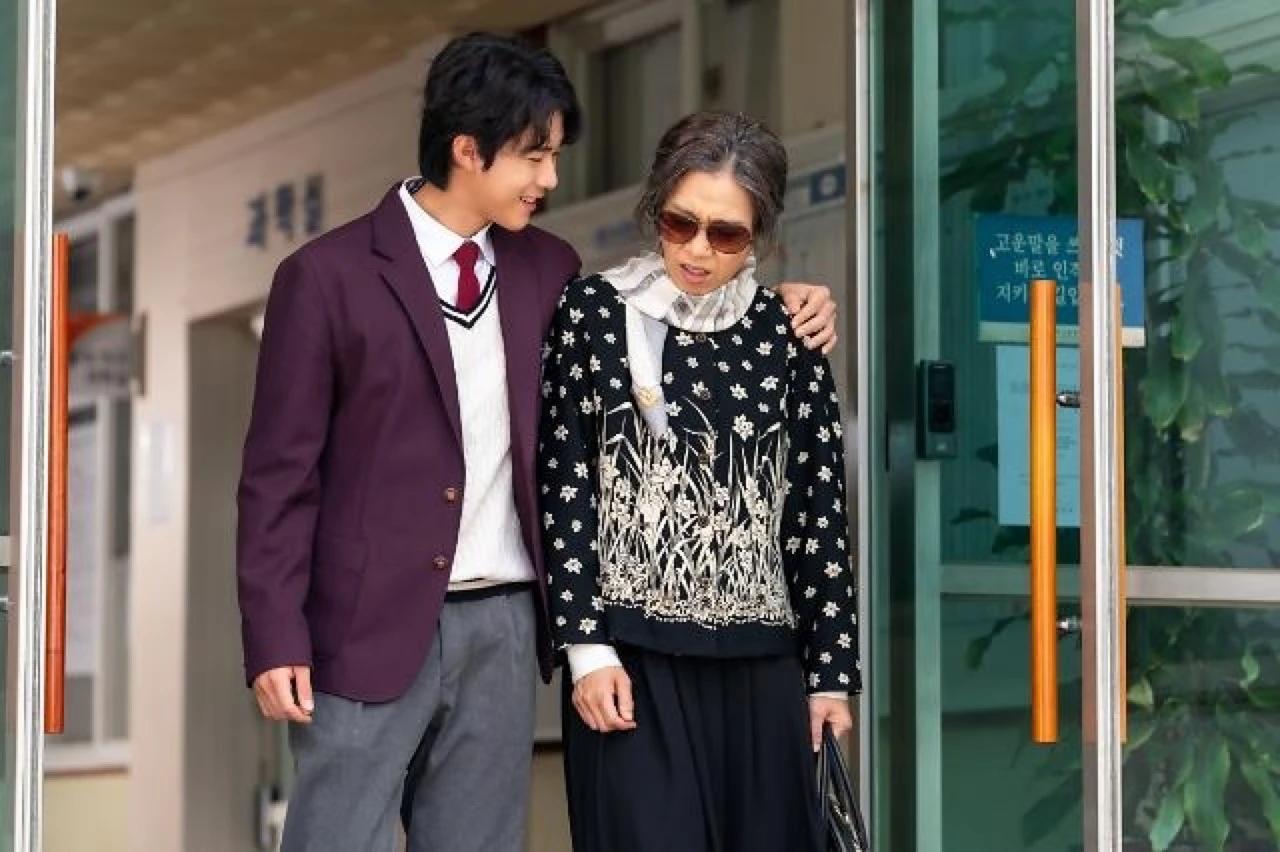
Gimbap and Onigiri follows Park Rin (Kang Hye-won), a South Korean animation graduate student studying in Tokyo who, buried under deadlines and abruptly locked out of her dormitory on the same night, stumbles into a small restaurant run by Taiga Hasegawa (Eiji Akaso). He makes her an onigiri because it is the only thing left in the kitchen. She is quietly undone by it. That single act of feeding a stranger is the engine that drives the next ten episodes.
The drama airs on TV Tokyo every Monday at 11:06 PM JST and streams simultaneously through Netflix worldwide. The full Japanese title translates to "Two People in Love Are Similar Yet Different," which tells you everything about the show's architecture: it is less interested in the differences between Korea and Japan than in the small, specific ways two people who seem like opposites find they want the same things. The series finale, Episode 10, is titled "Beyond Annyeong," a quiet signal of how far this cross-border relationship actually travels.

Kang Hye-won's Full-Circle Japan Moment
The reason Kang Hye-won can carry a Japanese-language lead role at all traces directly to her years in IZ*ONE. The group, formed through the Produce 48 survival competition in 2018, required its Korean members to divide their promotional activity between Seoul and Japan for two and a half years before the group officially disbanded in April 2021, confirmed by the IZ*ONE management consortium at the time. Kang spent that stretch learning the country, the industry, and the language in a way that classroom study alone would never have produced. She signed with Peace Entertainment in April 2025, shortly before being confirmed as the drama's lead that September. The role did not come to her because she was famous. It came because she had spent years building the specific skill set that a foreign-language lead role actually demands.
"Because I was active in Japan as a member of IZ*ONE, I was already somewhat familiar with the environment, so it didn't feel completely foreign," she told reporters at the Seoul press conference in January. "It really helped a lot. When it comes to language, if I hadn't had that experience, I don't think I could have achieved this level of fluency just by studying for two months."
Her co-star noticed immediately. "She was so good that I was genuinely surprised," Eiji Akaso said at the same event. "Although her character is Korean, her Japanese was so fluent that I wondered if she might actually be Japanese. After filming, when I asked where she was going, she would say, 'I'm going to study Japanese.' Her dedication was extraordinary."
Kang signed with Peace Entertainment in April 2025, shortly before she was confirmed as the drama's lead that September. Before Gimbap and Onigiri, she had built a measured but real resume: Once Upon a Boyhood (2023) earned her mentions on industry rising-actress lists, and Friendly Rivalry and To the Moon both followed in 2025. Those roles got her here. This role is the payoff.
Eiji Akaso Anchors the Other Half
Eiji Akaso, born in Osaka in 1994, brings Taiga to life as a former marathon prodigy who collapsed under the weight of his own potential and found something steadier in the rhythms of a small kitchen. Known in Japan primarily for the tokusatsu series Kamen Rider Build, Akaso plays sincerity as a strength rather than naivety, which is exactly what the character needs.
"Taiga meets Park Rin through his part-time job and the show centers on how he grows after that," he explained at the press conference. "The characters are as warm and approachable as the title suggests. It is a story about people who live sincerely and love sincerely."
The supporting cast includes Korean actress Moon Ji-hoo alongside Japanese actors Mai Fukagawa, Rin Kataoka, Shodai Fukuyama, and Bang Eun-hee, rounding out a production that is genuinely bilingual at every level. The script was co-written by Lee Nawon, who previously wrote the TBS drama Take Me to the End of Hell.
aespa and NCT WISH on the Soundtrack
aespa's "In Halo" is the drama's official theme song, marking the group's first contribution to a Japanese television production. The track premiered with Episode 1 on January 12 and went to digital release on January 26. Per the official description, "In Halo" was written to evoke "two people's fateful encounter and the emotional turmoil that surrounds them," which aligns closely with the show's opening act.
NCT WISH's "Same Sky" functions as an insert track beginning with Episode 3, which aired January 26. Two SM Entertainment acts on one drama soundtrack is not a coincidence: the show was built to cross borders, and the music strategy is part of that push. It worked. Both songs surfaced in Korean and Japanese charts, adding another dimension to the drama's reach before the season even reached its halfway point.
Why It Connects
Korean-Japanese romance is not a new format, but Gimbap and Onigiri avoids the trap that sinks most entries in the genre. It does not use the cultural gap as a plot obstacle to be overcome. The gap simply exists, as it does for millions of people who move between these two countries for school or work, and the drama trusts its leads to make the love story feel real regardless. The food metaphor at the center, gimbap and onigiri as parallel comfort foods from different sides of the sea, earns its place without being overworked.
Fan reaction has tracked the show's evolution in real time. On Reddit's r/JDorama community, viewers debated Kang's performance episode by episode, with most concluding that she noticeably improved across the first three episodes as she settled into the language. K-pop fans on X have been louder, treating the drama as the natural conclusion to a journey that started when a teenage Kang boarded a plane for Japan as a newly debuted idol in 2018.
Netflix's global distribution has extended the show's footprint well past the Japan-Korea corridor. In a year when cross-border entertainment collaborations have become standard, Gimbap and Onigiri stands out as one that feels built from genuine material rather than assembled for reach. Kang Hye-won didn't just get cast in a Japanese drama. She spent six years becoming someone who could carry one.