Share This Article
Jennie Just Won at Korea's Most Artist-Focused Awards. Here's Why That Actually Matters.
Jennie swept both K-Pop categories at the 2026 Korean Music Awards while Lee Chan-hyuk took Song of the Year. Here is what happened and why these wins carry real weight.
February 27, 2026
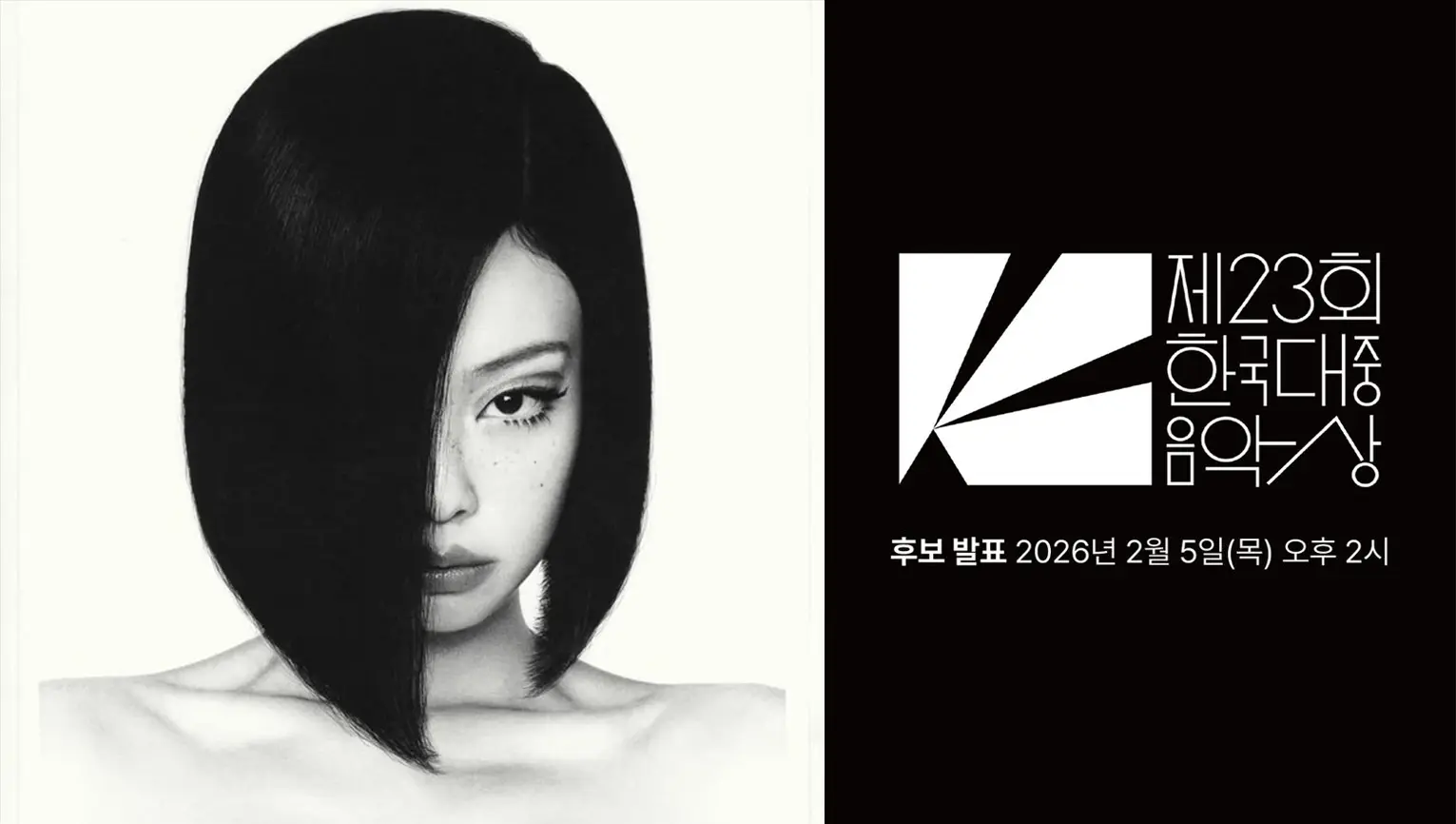
The Korean Music Awards doesn't care about streaming numbers. It doesn't care about comeback timelines, fan voting windows, or which agency has the biggest marketing budget. The ceremony, now in its 23rd year, hands out trophies based on one thing: artistic merit. A jury of critics, musicians, and industry professionals decides. Fans don't get a vote. And historically, BLACKPINK members and AKMU didn't collect hardware here.
Last night, they did.
What Is the KMA, and Why Does It Matter?
Most global K-pop coverage focuses on MAMA or the Golden Disc Awards. Both are legitimate, but MAMA runs on fan votes and Golden Disc tracks commercial performance: physical album sales, digital streams, and chart positions. BLACKPINK and BTS are built to dominate both. The Korean Music Awards is different.
Founded in 2004, the KMA operates outside the idol system. Indie rock bands, jazz vocalists, and experimental producers compete alongside K-pop acts on equal ground. Past winners include artists most international fans have never heard of. Winning here means critics respect your work on its own terms, entirely separate from fandom size or sales figures.
This year's 23rd KMA, held February 26 in Seoul, was supported by the Kakao Creative Foundation, Melon, and the Korean Ministry of Culture, Sports and Tourism. Nearly all nominees attended what musicians in Korea describe as a genuine industry celebration, not a televised competition for fan armies.
Jennie Wins Both K-Pop Categories
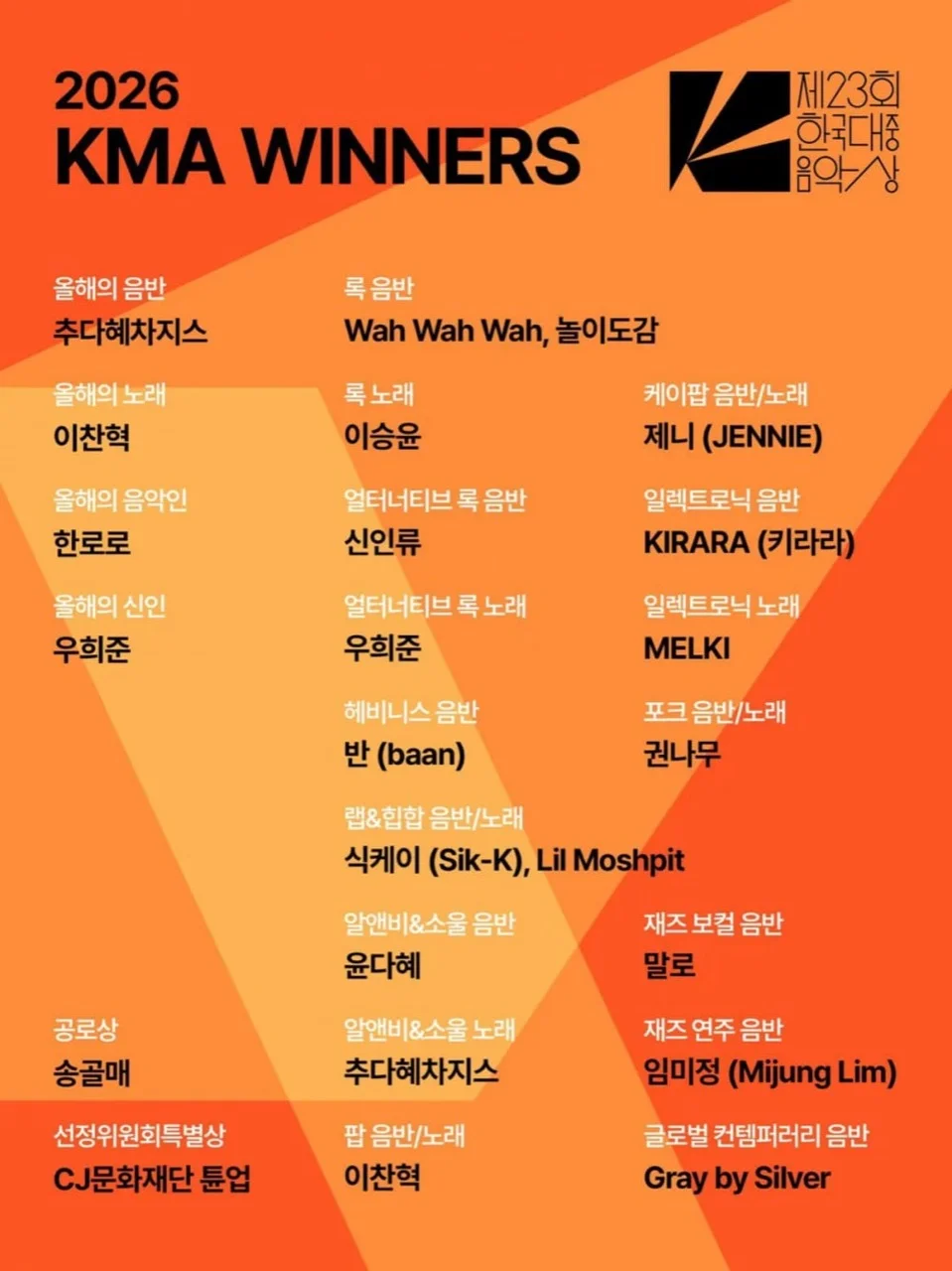
Jennie won Best K-Pop Album for Ruby and Best K-Pop Song for "Like JENNIE," sweeping every category where K-pop competed at the 2026 KMA.
Ruby, released in March 2025 under her own Odd Atelier label via Columbia Records, sold over one million copies worldwide and reached historic chart positions in the UK for a Korean solo artist. At MAMA and Golden Disc, that commercial record would be enough to win on raw numbers. At the KMA, the jury had to decide that Ruby was artistically strong enough to beat the indie field. They decided it was.
Per Forbes, Jennie's wins "demonstrate that K-pop artists can achieve critical validation at Korea's most artistically rigorous awards ceremony, even when competing against the country's diverse independent music scene." The KMA created K-pop categories precisely because K-pop had grown too large to ignore, but giving both trophies to a solo idol against a full indie field is a different kind of statement.
Lee Chan-hyuk Takes Song of the Year
Lee Chan-hyuk of AKMU swept three trophies: Best Pop Album for EROS, Best Pop Song for "Endangered Love," and Song of the Year, the ceremony's top honor. He delivered his acceptance speech via video message.
AKMU has always occupied a unique space in Korean music. The sibling duo, consisting of Lee Chan-hyuk and Lee Su-hyun, signed with YG Entertainment after winning the survival show K-Pop Star in 2012. They write and produce their own material, which has always made them credible outside idol circles. But EROS is explicitly a solo project, distinct from the AKMU sound. The album title plays on the Latin word for love and its phonetic overlap with the English word "errors," and the jury responded to it with the KMA's highest honor.
Winning Song of the Year against indie artists who have built entire careers around that stage, with a project produced entirely by the artist himself, is a validation that travels beyond the K-pop conversation.
The Rest of the Night
Album of the Year went to indie artist CHUDAHYE CHAGIS for SOSUMINJOK, confirming that the KMA's top prize still belongs to the independent scene when the work demands it. Musician of the Year went to Hanroro. Rookie of the Year went to Woo Huijun.
In the Rap and Hip-Hop categories, the producer-rapper duo Sik-K and Lil Moshpit swept both album and song, the first double win in that category in three years, following the same formula Nucksal and Cadejo pulled off previously. Mentor and student KIRARA and MELKI both won in their respective electronic music categories. Lee Seung Yoon took Best Rock Song and performed for the first time at the KMA in seven years, humorously announcing his own award mid-ceremony.
NMIXX led nominations alongside Jennie with five each, the second-highest nomination count of the night behind Effie's six. Converting nominations to wins at the KMA requires clearing the indie competition. That NMIXX was nominated five times at this ceremony, against artists who typically dominate it, is a notable signal on its own.
What This Signals
For years, K-pop dominated global sales, streaming, and fan-voted ceremonies while critics maintained a clear distinction: indie and experimental work represented a different standard, and the KMA was part of that wall.
Jennie and Lee Chan-hyuk didn't tear it down. The wall is still mostly standing. But two K-pop-adjacent artists winning the most artistically significant awards of the night, in the same year, at the ceremony that has historically been a K-pop-free zone, is not noise. It's a signal worth watching.