Share This Article
Mongle Mongle Mongle: The SBS Show That's Quietly Rewriting What Korean Dating TV Can Be
Korea's first romance reality show for young adults with developmental disabilities hit Netflix's Top 10 in its opening week. Here's why Mongle Mongle Mongle is one of the most important things on Korean television right now.
March 15, 2026
Korea's dating show machine has been running on the same fuel for years: beautiful strangers, manufactured tension, and the chemical rush of watching people who seem engineered for each other circle the inevitable. It works. It always works. But it took a documentary director with a brother who has a developmental disability five years of pitching to finally ask the question nobody else in Korean television had thought to ask: what about everyone else?
Mongle Mongle Mongle (몽글몽글몽글), the new SBS Special series currently climbing Netflix Korea's charts, is not your next Single's Inferno. It is something more uncomfortable and more necessary. It is the first Korean entertainment show built entirely around young adults with developmental disabilities pursuing romance, and it is extraordinary.
Five Years to Get Here
Director Go Hye-rin (고혜린) pitched this show five years ago. She was not motivated by trend or algorithm. Her younger brother has a developmental disability, and when he became an adult, she found herself unable to imagine him dating. That blind spot, she realized, was the problem.
"What we don't think about tends to be treated as if it doesn't exist," Go said in a press interview ahead of the premiere. "And when something feels like it doesn't exist, people can start to give up on themselves."
Go won the 61st Baeksang Arts Award's TV Educational Program Award for her SBS documentary Special-Hakjeon, so she came into this project with credibility and a track record. Even so, it took five years. That timeline alone says something about where Korean broadcasting has historically drawn its lines around who gets to be the subject of a love story.
Before filming began, Go and her team conducted more than 500 interviews. The response from potential participants was immediate and overwhelming: these were young adults who had been thinking about love for years, who had watched every dating show Korean television had produced, and who had quietly accepted that none of those shows would ever be for them.
Who's On Screen
The three central participants, whom the show affectionately calls "Mongle Ssi" (the Korean term roughly meaning "soft-hearted ones"), each bring something distinct to the series.
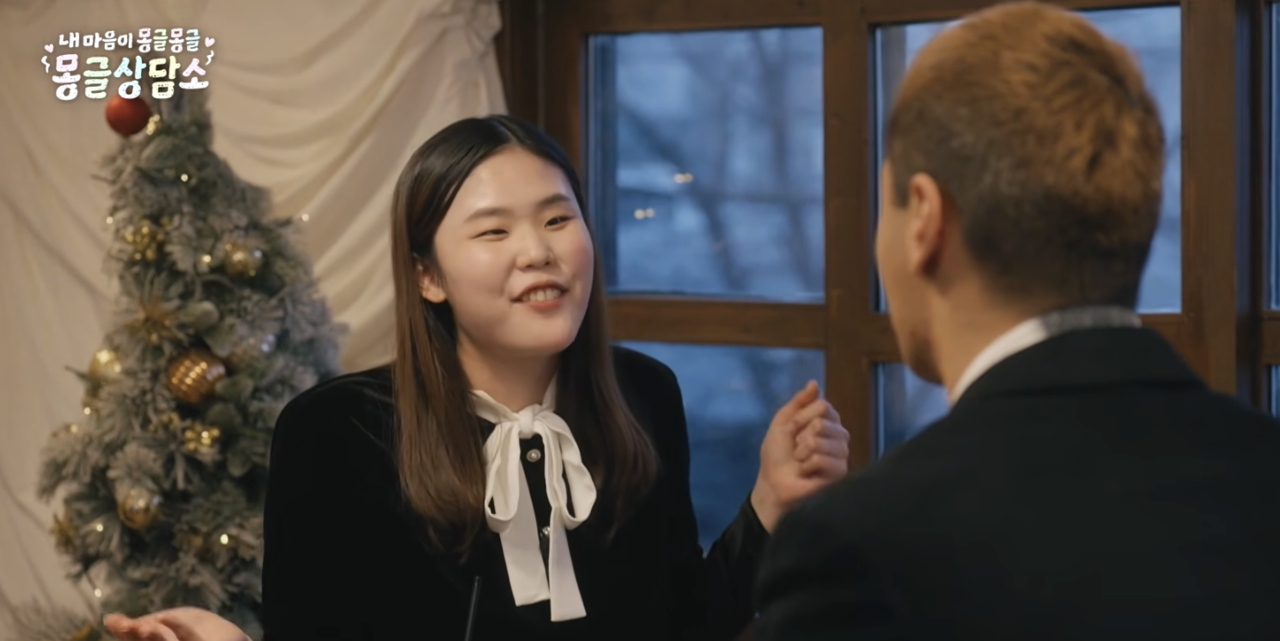
Oh Ji-hyun has a Level 3 intellectual disability and earned the nickname "human vitamin" in the premiere for her brightness and verbal fluency. In episode two, she looks back on her first blind date with national swimmer Lee In-guk. Yoo Ji-hoon, who is on the autism spectrum, has become something of a fan favorite for his deadpan honesty. When asked about his ideal type, he named actress Kim Yoo Jung and IVE's An Yujin with complete sincerity. Jung Ji-won, who has Down syndrome, opened up about having dated once in college and about a painful period during his school years when he had no friends and considered harming himself before a teacher intervened. That moment, delivered quietly on a reality show, landed harder than anything Single's Inferno has produced in three seasons.
The Lee Hyori Factor
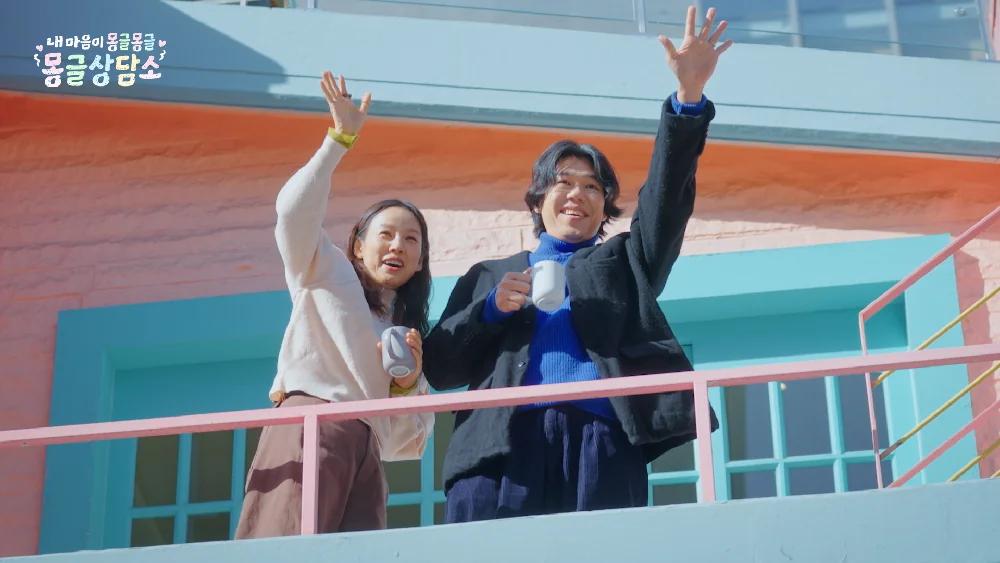
Choosing Lee Hyori and her husband Lee Sang-soon as the show's center directors was a deliberate casting decision, and it was the right one. The couple, married for 14 years and still visibly fond of each other, carry a warmth that the show's premise requires. This is not a format where you want hosts with slick presentation skills. You want people who feel like they mean it.
Lee Hyori being here also matters symbolically. She is one of the most iconic figures in Korean pop history, a solo powerhouse and a recognizable face across generations of Hallyu. Having her sit across from Ji-hyun and Ji-hoon and Ji-won, not as a celebrity dropping in for a cameo but as someone invested in whether these three find love, sends a specific message about whose stories deserve that kind of attention.
In episode one, Lee Hyori joked about being out of practice herself: "It's been so long since we've even been affectionate ourselves. Do you think we can really mentor them?" Lee Sang-soon confirmed that these days they barely hold hands. The audience laughed. The participants laughed. It worked because the moment was real, and realness is what this show is built on.
The theme song carries a notable signature too: music director No Young-sim, who scored Extraordinary Attorney Woo, composed the track. Lee Hyori recorded it. Lee Sang-soon produced it. The creative fingerprints on this project reflect a deliberate choice to treat it as something meaningful.
The Extraordinary Attorney Woo Parallel
Extraordinary Attorney Woo was the drama that proved Korean audiences would show up for neurodivergent representation if the writing respected its subject. It became one of the most-watched Korean series of 2022 globally. Mongle Mongle Mongle operates in a different space, reality rather than scripted, but the comparison being made by Korean press and viewers is not accidental. Both push back against the idea that these stories are niche or difficult. Both argue, through completely different formats, that the audience is larger and more open than the industry has assumed.
The show debuted at number seven on Netflix Korea's Today's Top 10 Series as of March 12, in its opening week. Key clips have amassed over 35,000 views on digital platforms. These are not fringe numbers for a Sunday-night SBS Special with a subject matter that has never been attempted before in this format on Korean television.
The Risk That Comes With This Territory
It would be incomplete to write about Mongle Mongle Mongle without acknowledging what the Korea Herald flagged after the premiere: the transition from documentary-style storytelling into entertainment carries inherent risk. The cast is now visible on platforms built for speed, meme culture, and virality. As clips circulate, the potential for mockery or reductive framing is real. Go Hye-rin and the SBS production team made the right call in episode one. The question is whether that standard holds as the show gains traction and the digital audience grows beyond the people who showed up because they were already invested.
Go has been clear-eyed about this. "It can't represent every life," she has said. "But if it starts the conversation, that alone is meaningful. We're ready to receive criticism, too."
That willingness to be held accountable is part of why the show has earned the goodwill it has. Go did not make this to be celebrated. She made it because her brother, and thousands of young adults like him, have been watching Korean television their entire lives without seeing themselves in a love story. Mongle Mongle Mongle is, above everything else, a correction to that absence.
Episode two airs tonight, March 15, at 11:05 PM KST on SBS Special and Netflix Korea. If you have not watched episode one yet, it is a Sunday night well spent.