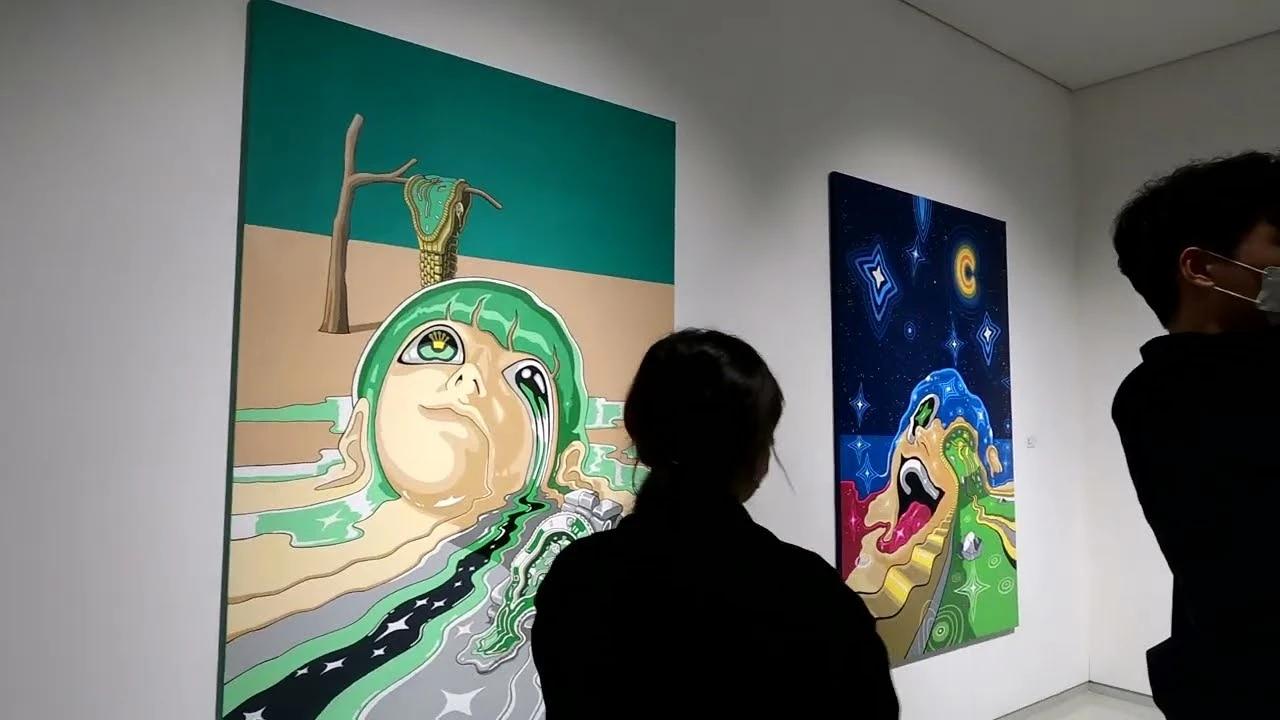
Share This Article
Kian84's 150 Million Won Resale Listing Just Sparked a Korean Art-Market Ethics Fight
Kian84's Starry Cheongdam resurfaced on Karrot at 150 million won, turning a charity-linked painting into a bigger argument about celebrity art, resale culture, and Korean status economics.
May 11, 2026
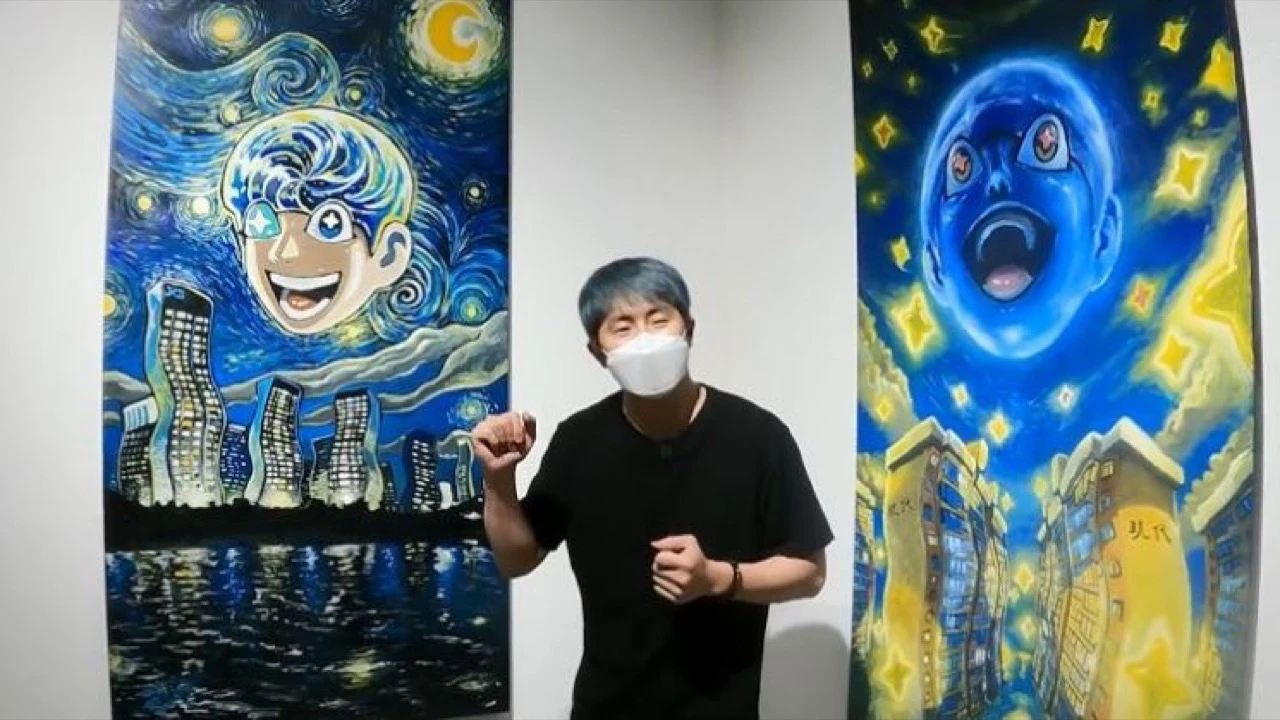
Kian84 (기안84) just got pulled into a 150 million won resale argument that says as much about Korea's status economy as it does about one painting. According to Asiae's May 7 report, a seller in Seoul's Seocho District listed Kian84's Starry Cheongdam on Karrot and said the work was going up for sale because of a relocation. That alone would have been enough headline fuel. What makes it stick is the backstory: the piece came out of Kian84's 2022 solo exhibition Full Ownership, a show built around real estate desire, class anxiety, and the way Seoul apartment mythology shapes everyday aspiration. When a webtoon star's canvas starts circulating like a speculative asset, the story stops being about fandom memorabilia. It becomes a sharp snapshot of how celebrity, scarcity, and Korean contemporary art now collide in full public view.
Kian84, born Kim Hee-min, is not some random celebrity hobby painter. He first built his name through Naver Webtoon hits like Fashion King, then became a mainstream TV fixture through MBC's I Live Alone. Forbes noted in 2022 that he had already moved beyond one-off novelty status and into a real gallery career, with a Seoul solo show followed by a London StART Art Fair appearance. That matters here because the market is not pricing an anonymous canvas. It is pricing a public figure whose art, media profile, and outsider image all feed each other. In other words, buyers are not just shopping for paint and panel. They are buying proximity to a cultural character that Korea already knows by heart.
Kian84's donation history is why the 150 million won asking price hit a nerve
According to MK's May 7 report, Kian84 donated the full 87 million won in proceeds from Full Ownership, and that charitable context is exactly why the resale listing landed with such a thud. This was never just a rich seller trying their luck. The online backlash came from the gap between the original public meaning of the exhibition and the later resale logic attached to one of its works. A painting that entered the world through a donation-minded show was suddenly being reframed as a flip candidate with a higher headline number than the entire original proceeds pool. That does not automatically make the seller wrong. Art can be resold, and markets do what markets do. But it does explain why the debate immediately shifted from price to ethics, then from ethics to whether celebrity-made art in Korea is now being treated like luxury property.
Karrot turned a gallery resale into a neighborhood morality play
The resale looked even stranger because it happened on Karrot, a platform that describes itself as a Korea-born community app built around local secondhand exchange and neighborhood connection. Seeing a nine-figure artwork show up in that setting changes the tone instantly. On an auction platform, a speculative ask reads like business. On a local resale app, it reads like someone dragging blue-chip behavior into an everyday marketplace where people usually expect strollers, chairs, and used appliances. According to Asiae, the listing was later deleted after drawing attention, which only intensified the sense that the asking price had crossed an invisible cultural line. We are not talking about whether a collector is allowed to sell. We are talking about how the venue of the sale made the work feel less like a serious secondary-market listing and more like a public stress test for Korea's appetite for celebrity art speculation.
Kian84's resale flap says webtoon creators now move inside a bigger cultural asset economy
Kian84's resale flap matters because it shows how far Korean creator culture has stretched beyond screens and into asset logic. We have already seen the webtoon business dominate streaming pipelines, but this episode suggests the same creator economy can also spill into collecting, resale, and status performance. As reported by Asiae, another Kian84 work, Life Adjustment Time 4, was listed secondhand in 2024 at 30 million won before being cut to 21 million won, so this is not an isolated glitch. It is a pattern. And it lands at a moment when institutions like The Korea Society's recent discussion of Korean contemporary art are already framing the sector as a global market story, not just a local curiosity. That is why this listing matters. It is messy, a little absurd, and completely on theme for a culture where fame, property, and aesthetics now trade value with each other in real time.