Share This Article
South Korea's concert venue shortage is becoming K-pop's next infrastructure crisis
South Korea's K-pop venue shortage is turning into an infrastructure crisis as demand outgrows Seoul's limited arena and stadium supply.
May 11, 2026
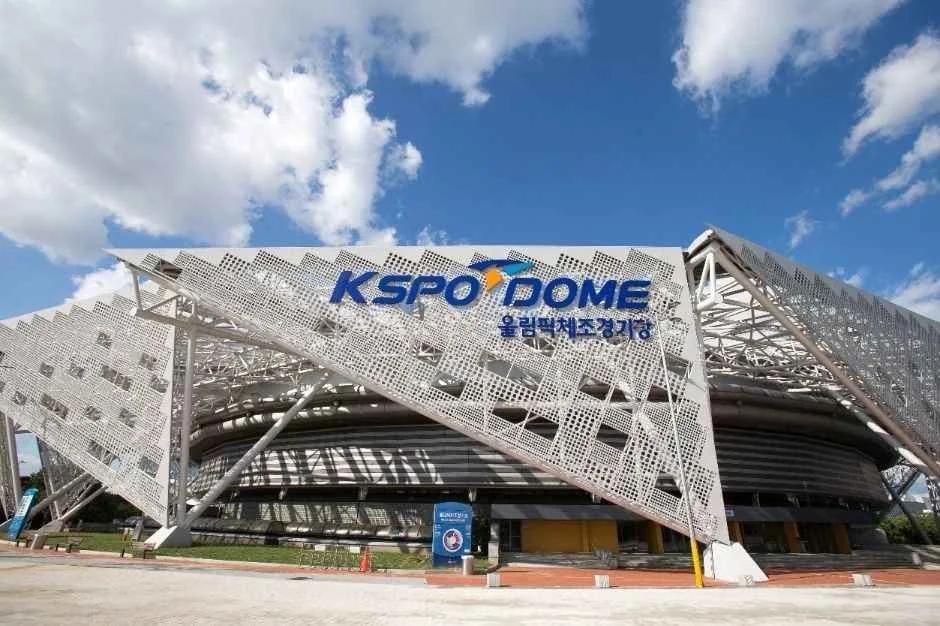
South Korea's shortage of large concert venues is becoming one of K-pop's biggest growth constraints in 2026, as soaring demand collides with a tiny pool of arenas and stadiums that can actually handle major tours at home. According to The Korea Times, agencies are now fighting for dates at KSPO Dome while Jamsil Baseball Stadium remains effectively unavailable for years and more shows spill into compromise venues in Goyang and Incheon. That matters because K-pop is no longer short on fans, production ambition, or global leverage. It is short on rooms big enough, flexible enough, and acoustically credible enough to stage the version of itself it now sells to the world. In a year when touring is supposed to look like K-pop's victory lap, the industry's home market is starting to look underbuilt.
The bottleneck is easy to quantify. VISITKOREA's 2026 concert venue guide lists EXO, NCT, and other major acts around a venue map where KSPO Dome sits at roughly 15,000 capacity and Gocheok Sky Dome tops out around 18,000, according to the official tourism guide. That is not much margin for an industry built on blockbuster demand, especially with large stadium options either tied up by renovations, baseball schedules, or turf politics. We have reached the point where K-pop's domestic live business does not look constrained by audience appetite. It looks constrained by civic planning. When BTS can trigger chaos with ticket demand and SEVENTEEN can sell stadium-scale runs abroad, the idea that Korea still lacks enough premium concert infrastructure feels less like a temporary snag and more like a structural misread.
Seoul's biggest live-music problem is simple: not enough viable rooms
South Korea has too few truly viable large-scale venues, and the problem gets worse the moment one key stadium drops out of rotation. The Korea Times reported in February 2024 that the Seoul metropolitan area had only a handful of venues above 10,000 seats, with Jamsil Sports Complex's main stadium shut for renovation and Gocheok Sky Dome unavailable for much of baseball season. The Korea Herald added in June 2025 that Seoul World Cup Stadium, while enormous on paper, remains a compromise venue because of turf protection concerns and inconsistent concert access. Put that together and the market starts looking absurdly tight for an industry that keeps exporting arena-ready acts. This is why every new booking announcement now carries an infrastructure subtext. The question is not only who is touring. It is where Korea can realistically put them once the scale jumps beyond theater-level fandom.
Goyang and Incheon are absorbing demand, but they are not perfect substitutes
More concerts are moving outside central Seoul because promoters need somewhere, anywhere, to land. The Korea Times' April 2026 report said bookings are being pushed toward multi-purpose facilities such as Goyang Sports Complex and Incheon Asiad Main Stadium, while the Korea Herald described Goyang's pitch in detail: easier date access, municipal support, and enough scale to host acts like G-Dragon, Stray Kids, and other stadium-level draws. But fans are not imagining the trade-offs. KINTEX has a reputation for flat sightlines. Open-air stadiums come with weather risk and seasonal limits. Inspire Arena is technically a win for the market, and the Herald noted its advanced rigging and acoustics, but recent bookings such as 2PM's The Return also underline the trade-off: its Incheon location still turns the trip into a logistical project for many Seoul-based attendees. This is expansion, yes. It is just expansion by workaround rather than by a fully solved venue ecosystem.
New arena promises sound good, but K-pop needs delivery, not renderings
South Korea has no shortage of future-tense solutions. The Korea Times said Seoul Arena, CJ LiveCity Arena, and another 20,000-seat project in Hanam were all supposed to help close the gap, while NextShark's earlier report on Seoul Arena captured how long this conversation has already been stuck in promise mode. That stalled timeline is why the shortage now feels like an infrastructure credibility issue, not just a concert industry complaint. K-pop has already proven it can fill premium rooms worldwide. HITKULTR has covered that global scale through SEVENTEEN's Hong Kong stadium milestone and the instant-demand chaos around BTS's Gwanghwamun concert. Korea should be the market setting the standard for how those shows land at home. Right now, it is still trying to catch up to the audience it already created.
Why this matters beyond ticketing headaches
K-pop's venue shortage matters because it quietly taxes every part of the ecosystem. Fans travel farther, settle for worse sightlines, or fight harder for fewer dates. Promoters lose flexibility. Artists lose the chance to stage their biggest ideas in their home market. According to the New York Times' April framing, the issue now looks like a wider bottleneck shaped by land shortages, bureaucracy, capital costs, and years of slow delivery. That bigger diagnosis feels right. Infrastructure is not background noise anymore. It is part of the K-pop story itself. If Seoul wants to remain the symbolic capital of a genre that now thinks in global stadium terms, it cannot keep relying on a venue map that forces success to behave like scarcity.