Share This Article
260,000 Fans, 15,000 Tickets, Zero Seconds: Inside the BTS Gwanghwamun Frenzy
Over 100,000 fans crashed the booking site as 15,000 free tickets for BTS's Gwanghwamun Square concert vanished in seconds. Seoul prepares for 260,000 people to descend on its most symbolic public space on March 21.
HITKULTR
February 24, 2026
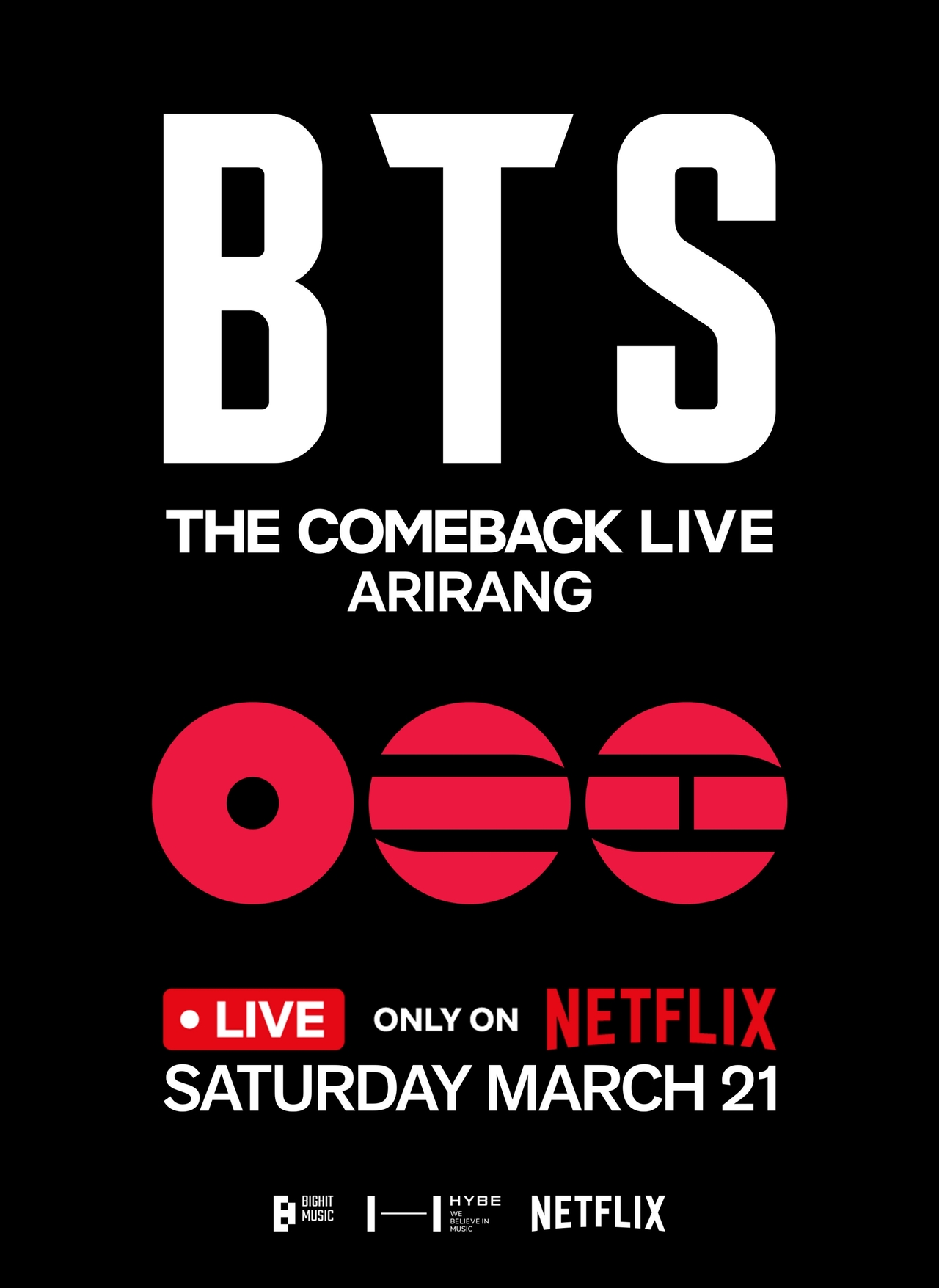
BTS turned a free Seoul concert into one of 2026's wildest ticketing events when 15,000 passes for Gwanghwamun Square disappeared within seconds on February 24. According to Seoul police and local reporting cited by Yonhap and The Guardian, more than 100,000 users hit the booking site at the same time while authorities prepared for crowd volumes that could reach 260,000 across central Seoul on March 21. That scale makes "BTS The Comeback Live: Arirang" bigger than a standard comeback stage. It is a city-level operation with transit controls, anti-scalping enforcement, Netflix's first global livestream from Korea, and a symbolic setting in front of Gyeongbokgung Palace. The event is not just selling excitement. It is testing how far a modern capital can stretch around seven returning superstars, and how much civic planning a single pop event now demands in Seoul.
Authorities expect the crowd to spill far beyond the 15,000 ticketed spaces in the square itself. Seoul Plaza viewing zones, government-hosted fan events, and unsanctioned overflow areas all factor into the city's planning. When a concert requires police zoning, station bypass plans, and palace-gate choreography, it stops being a normal live show and starts looking like civic infrastructure.
The Ticketing War
The chaos was predictable, and Seoul police saw it coming. Hours before tickets went live on NOL Ticket, police chief Park Jeong-bo announced that officers had already flagged and requested deletion of 34 fraudulent posts offering proxy ticket purchases or illegal resales. Scam prices ranged from 10,000 won to 1.2 million won for tickets to a free event, according to local law-enforcement briefings. Anti-scalping legislation passed in January allows fines up to 50 times the original ticket price, as reported by The Guardian. For a zero-cost concert, prosecutors are reportedly interpreting the law through attempted resale value rather than face value, a workaround that shows how seriously officials are treating this market distortion before BTS even steps onstage and before the wider March travel rush fully arrives.
Fans across South Korea flocked to PC cafes, the internet gaming venues with faster connections that have become fixtures of Korean ticketing culture. Online forums filled with stories of coordinated family operations. None of it mattered. The demand was simply too large for any individual strategy to overcome.
Gwanghwamun as Stage
Gwanghwamun Square sits directly in front of Gyeongbokgung Palace, Korea's most symbolically loaded public space, and that is exactly why this venue choice hits differently. According to Yonhap News Agency, the seven members are expected to emerge from inside the palace grounds and pass through the historic gates before reaching a main stage on the northern lawn. The Seoul Metropolitan Government is not renting out a plaza for convenience. It is staging BTS inside one of the country's most recognizable civic images, with 50 dancers and a 13-member traditional music troupe reinforcing the ARIRANG concept. That blend of state symbolism, heritage architecture, and stadium-pop scale is why this concert reads less like a promo event and more like a national spectacle designed for both locals on the ground and a global streaming audience worldwide.
British director Hamish Hamilton, famous for helming Super Bowl halftime shows, is directing. Media facades featuring Korean traditional motifs will be projected onto the Gwanghwamun gate walls during the performance. Similar projections are planned for Sungnyemun Gate on March 20, the day ARIRANG drops.
Seoul Becomes a Stadium
Seoul Metropolitan Police are treating the entire Gwanghwamun area as a virtual stadium. The zone stretches 1.2 kilometers from Gwanghwamun Woldae to City Hall Station and roughly 200 meters east to west. Twenty-nine designated passageways will control crowd flow in and out.
The police have divided the area into four risk zones: a Core Zone for the highest-density area directly around the stage, a Hot Zone where movement will be minimized, a Warm Zone allowing fluid crowd flow, and a Cold Zone functioning as an outer buffer. If congestion intensifies, authorities will restrict additional inflow and disperse crowds outside the perimeter.
Police have requested Seoul Metro consider temporarily bypassing Gwanghwamun Station, Gyeongbokgung Station, and City Hall Station if crowd levels become dangerous. The Sejong Center for the Performing Arts has cancelled all performances on March 21. The National Museum of Korean Contemporary History will close for the day.
Beyond the 15,000 ticketed spots in the square, an additional 13,000 fans will watch on large screens at Seoul Plaza near City Hall. The Seoul Metropolitan Government, which is officially sponsoring the event, will host nearby fan programming for roughly 30,000 people.
BTS-nomics Returns
Hotel prices across central Seoul have already surged, with some properties charging five times normal rates for the week of March 21. South Korea's president, Lee Jae Myung, responding to reports of similar price gouging in Busan for the group's world tour dates, condemned what he called "unscrupulous abuse that destroys the order of the entire market."
The economic impact of BTS on Seoul is well documented. Analysts have long tracked what they call "BTS-nomics," the measurable boost the group generates across tourism, hospitality, retail, and transportation. The Gwanghwamun concert, combined with the 82-date world tour that follows, is expected to inject billions of won into the Korean economy at a scale not seen since before the group's military hiatus.
The one-hour concert will be broadcast live on Netflix to 190 countries, marking the platform's first global livestream from Korea and targeting its 300 million subscriber base. A documentary film, "BTS: The Return," will follow on Netflix on March 27.
Nearly Four Years in the Making
All seven members of BTS, RM, Jin, SUGA, J-Hope, Jimin, V, and Jungkook, completed South Korea's mandatory military service over a staggered timeline. Jin was the first to enlist in December 2022 and the first discharged in June 2024. SUGA, who served as a social service agent due to a shoulder injury, was the last member released in June 2025.
The 14-track album ARIRANG drops at 1 PM KST on March 20, one day before the concert, through BigHit Music under the HYBE umbrella. According to BigHit Music's release schedule and Seoul's public event planning, the album launch and concert were built as a single two-day civic spectacle rather than separate promo beats. BTS are not just ending a hiatus here. They are showing, in real time, how a comeback can bend a city around it.