Share This Article
KPop Demon Hunters Is Rewriting Korea's Tourism Playbook
South Korea hit 18.9 million foreign visitors in 2025, an all-time record. The catalyst: a single Netflix animated film. The numbers tell the full story.
March 17, 2026
Two Oscars and 500 million streams later, HUNTR/X and the world of KPop Demon Hunters (케이팝 데몬 헌터스) have done something no K-drama, no K-pop comeback, and no Korean wave before it has managed to pull off at this scale: they turned animation into infrastructure. South Korea just logged its best tourism year ever, and the numbers point directly at a single Netflix film as the catalyst.
The timing is not subtle. KPop Demon Hunters dropped on Netflix in June 2025. By July, 1.36 million international travelers had visited Seoul in a single month, a 23.1% jump from the year before. By year's end, South Korea had received 18.9 million foreign tourists, an all-time record, according to Korea's tourism board. Global flight bookings to Korea spiked 25% in the months following the release, with the biggest surges coming from Canada, Australia, and Southeast Asia.
The Oscars win for Best Animated Feature and Best Original Song has only turned up the volume. Q1 2026 visitor numbers are tracking 12% ahead of Q1 2025, according to South Korea's Ministry of Culture, Sports and Tourism. We are nowhere near peak.
The Seoul They Came to See
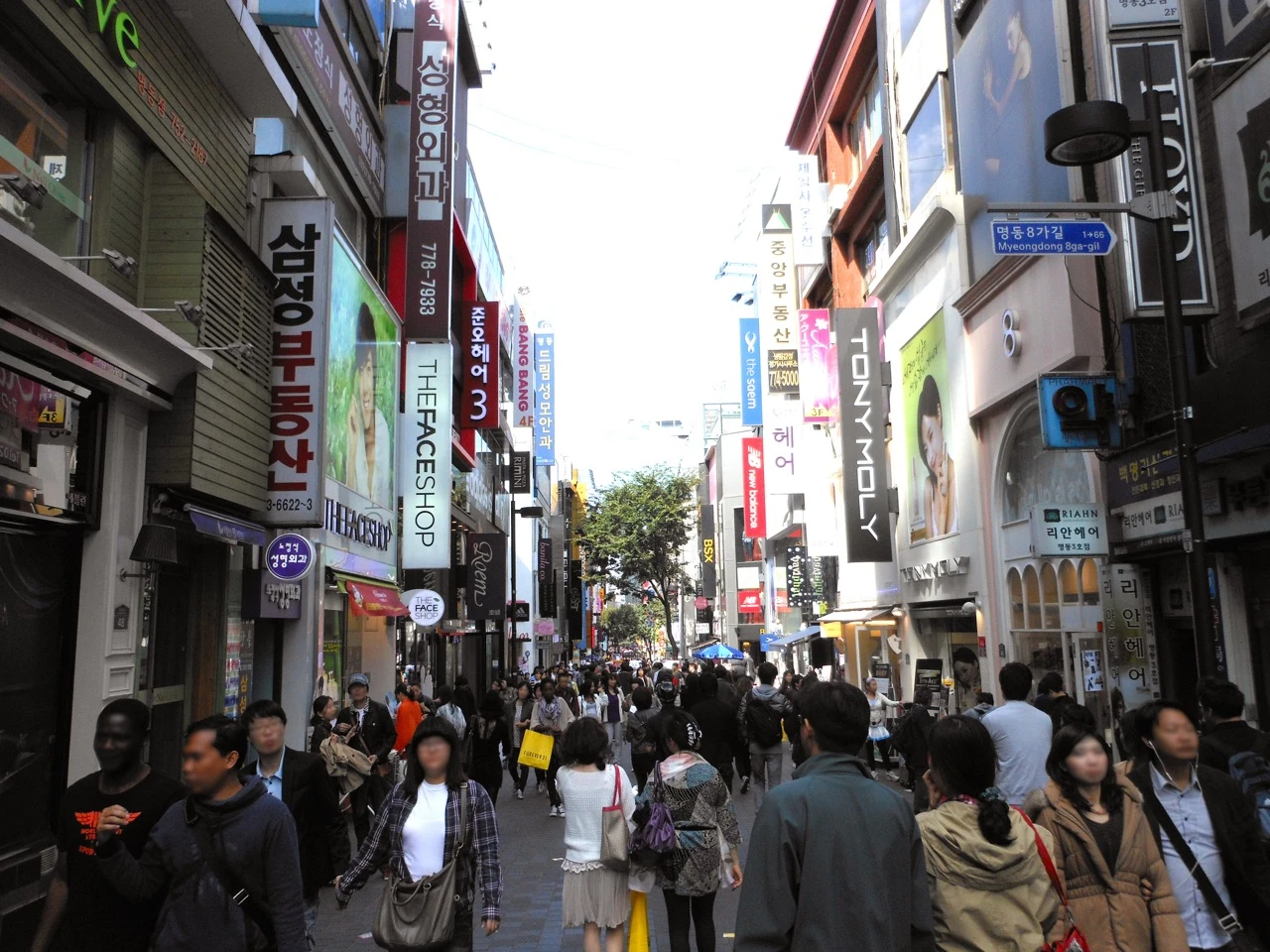
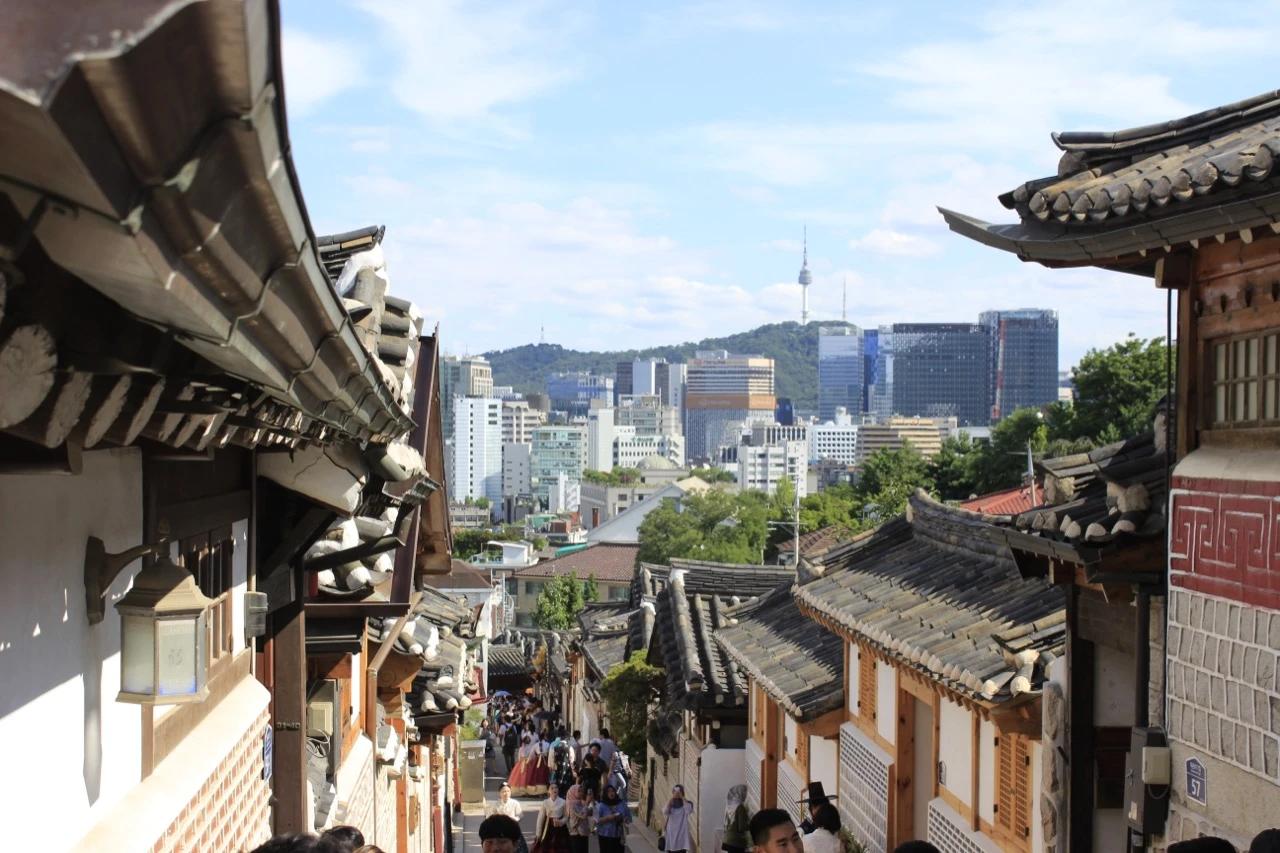
Every fan arriving in Seoul has a list. It reads like a scene-by-scene breakdown of the film. Bukchon Hanok Village, where HUNTR/X's rooftop training sequences play out against traditional curved tile rooftops, has become the top trending Seoul tour on Trip.com. The COEX K-Pop Square, which opens the film with a pulsing digital billboard, is drawing crowds who show up just to recreate that moment. Myeongdong, the chaotic street where Saja Boys perform "Soda Pop," is already one of Seoul's most visited corridors but it has found a new generation of first-time visitors who know it through animation before they've ever set foot in Korea.
Naksan Park Fortress Trail, N Seoul Tower (Namsan Tower), and Seoul Olympic Stadium round out what travelers are now calling the "HUNTR/X circuit." The National Museum of Korea, which sells official KPop Demon Hunters merchandise including tumblers, character keyrings, and traditional costumes, has seen a significant increase in foot traffic from visitors specifically coming for the gift shop.
Beyond the Map: What Fans Are Actually Doing

The more interesting story is not which landmarks fans are visiting. It is what they are doing between landmarks. KPop Demon Hunters depicted Korean bathhouse culture, traditional medicine, traditional Korean dress (hanbok), and food like ginseng chicken soup (samgyetang) and gimbap (Korean seaweed rice rolls) with enough warmth and specificity that first-time visitors arrived wanting the full picture, not just the photo ops.
Bookings for the exfoliating body scrub treatment at Korean spas and bathhouses, a ritual that appears in the film, rose 115% in summer 2025 compared to the previous spring, according to Creatrip, a Korean travel booking platform cited by Euronews. That is not Coachella energy. That is genuine cultural curiosity converting into reservations.
Online, the community has exploded. A Facebook travel group dedicated to Korea trips doubled from 65,000 to 120,000 members between June 2025 and January 2026, per Bloomberg. On Reddit's r/koreatravel, threads about KDH filming locations and itinerary planning regularly pull thousands of upvotes. The algorithm did not create this demand. The film did.
The Government Noticed
In September 2025, South Korea's Ministry of Culture, Sports and Tourism launched the K-Tourism Innovation Task Force, a multi-agency body bringing together the Korea Tourism Organization, Korea Railroad Corporation, academia, and private sector partners. The mandate is specific: convert a Seoul-centric tourism boom into regional distribution, improve airline connectivity to secondary cities, and build the infrastructure to handle sustained demand.
This is not a press release initiative. It is an acknowledgment that something structural has shifted. Previous Hallyu waves, from the K-drama tourism of the early 2000s to the BTS-driven boom of the late 2010s, brought visitors to Korea. But those visitors were mostly seeking proximity to celebrity. The KPop Demon Hunters wave has drawn visitors who want to understand the culture itself. The difference shows up in what they book, what they eat, and where they go off-script.
What Makes This Different
We have covered the Criterion edition, the Annie Awards sweep, and how TWICE turned the film into a live spectacle. But the tourism story is different because it does not belong to the entertainment calendar. It is still happening. The Q1 2026 numbers are not a trailing indicator. They are a leading one.
No animated film has generated a government task force response in South Korea before this. No streaming release has moved flight booking data at 25% in a single category. And no single piece of Korean content has so effectively introduced viewers to Korean culture beyond idol stages and drama sets, and then convinced them to buy a plane ticket to experience it themselves.
That is not just a good quarter for Korean tourism. That is a new playbook.