Share This Article
Why Global Stars Keep Using Korea as Their Asia Launchpad
Global artists are using Korea as an Asia launchpad because Seoul's promo machine, export-ready fan culture, and growing concert circuit now deliver regional visibility faster than a standard tour stop.
May 4, 2026
Global artists keep using Korea as their Asia launchpad because Seoul’s music-show ecosystem, fan platforms, and export-ready pop coverage can turn one local promo stop into visibility across Southeast Asia faster than many single-country campaigns can on their own with unusual efficiency. That logic is already visible in how Santos Bravos and KATSEYE have leaned on Korean promotions tied to HYBE, according to Korea JoongAng Daily’s reporting on the shift. Korea is no longer just the origin point of K-pop exports. It is starting to function like a regional amplifier for non-Korean acts that want sharper reach, stronger fan signaling, and a credibility boost that travels well beyond Seoul. That is why this moment matters. The country’s entertainment machine is becoming infrastructure for global pop, not just a national scene with unusually good branding.
Korea’s promo stack now travels better than a normal tour stop
Korea’s edge is not simply that artists can book a concert in Seoul. The bigger draw is the full stack around it: TV-ready performance formats, instantly clipped social content, fan communities trained to circulate subtitled footage, and a media environment that still treats music appearances like events. Korea JoongAng Daily framed that clearly when industry voices explained that Korean music shows and programs can reach fans across Southeast Asia more effectively than a standard local-market promo run, especially for acts trying to move beyond their home base. That helps explain why Santos Bravos showed up on Mnet and why KATSEYE, despite being pitched as a global pop act, kept returning to Korean stages. In plain terms, Korea now offers a visibility engine. Artists are not chasing ticket revenue from Seoul alone. They are chasing the regional signal that comes from being seen winning attention inside Korea’s entertainment machine.

The concert calendar shows the demand is real
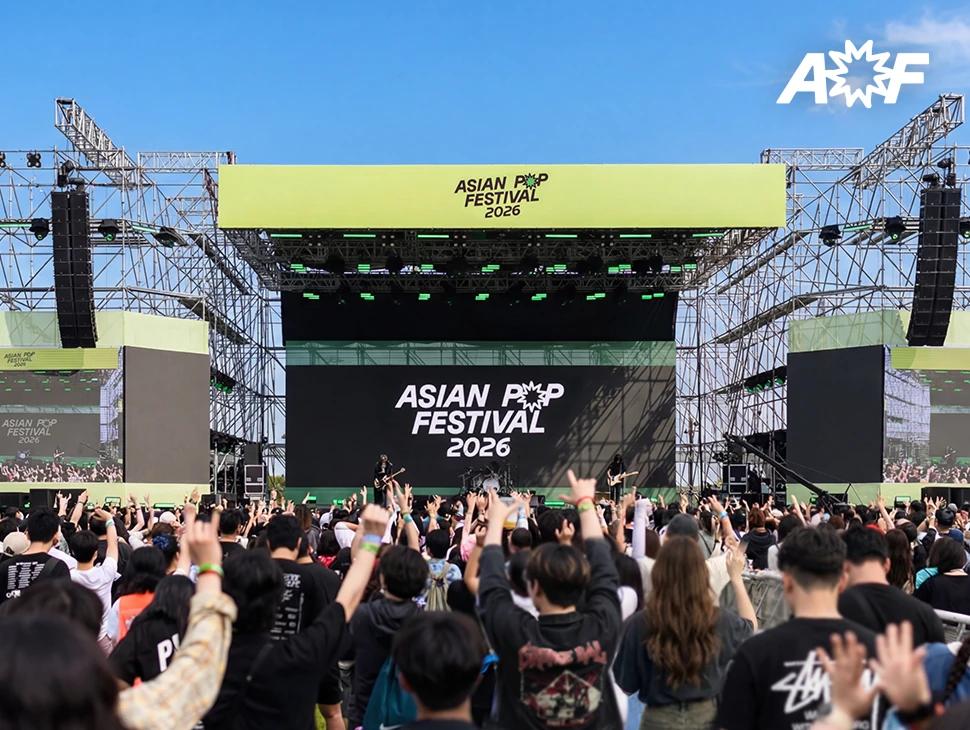
The bookings back up the thesis. The Korea Times reported that Deep Purple, Daniel Caesar, Post Malone, HONNE, and Kodaline are all part of Korea’s 2026 concert pipeline, with dates spread across Incheon, Goyang, and Seoul as promoters look for any workable scale. According to Maeil Business, Paradise City wants to push Yeongjongdo as a music-performance hub after Deep Purple's Korea return and ahead of Asian Pop Festival 2026. This is where the story gets more interesting than simple tour routing. Korea is not only hosting foreign artists. Korea is packaging them inside venues, resort complexes, and promotional settings designed to make a show feel like a regional cultural event. We have already seen HITKULTR cover Korea’s wider festival buildout in our report on Fanomenon and Korea’s festival ambitions, and this global-artist wave fits that same expansion story.
The venue crunch is the giveaway
If this were a niche trend, Korea would not be running into an infrastructure problem. But it is. The Korea Times reported that the shortage of large concert venues is forcing more bookings into secondary facilities outside Seoul, while fans keep complaining about compromises in sightlines, weather exposure, and event flow. That crunch is exactly why NextShark's earlier report on Seoul Arena's planned capacity still feels relevant. Korea has spent years talking about building venues that match its cultural weight, and demand is now moving faster than the concrete. The result is a strange but telling split-screen. Korea’s promotional power is strong enough to attract more global acts, yet its live infrastructure still looks undersized for the moment it helped create. That tension is the clearest proof that Korea is not just participating in Asia’s touring map. It is becoming one of the stops that shapes the map.
Why this matters beyond one busy concert season
This shift says something bigger about how Hallyu works in 2026. Korea used to export artists outward and measure success by how well they localized overseas. Now foreign acts are also moving inward because being processed through Korea can lift their status across Asia. That is a more powerful position than simple market size. It means Korea can act as a validator, a content factory, and a fan-distribution node at the same time, according to the Korea JoongAng Daily analysis and the Korea Times concert-market reporting. It also matches the soft-power logic we outlined in our earlier piece on K-pop’s diplomatic pull. The smart read is not that Korea is replacing every other Asian music capital. It is that Korea has become the fastest way for many global acts to look regionally relevant, and right now that may be even more valuable.