Share This Article
K-Pop Owns the Album: How Korean Acts Conquered 70% of the World's Top 10
K-pop acts claimed seven of the top 10 spots on the IFPI Global Album Sales Chart for 2025. Stray Kids hit #2 globally, trailing only Taylor Swift. Here's what the numbers really mean for the music industry.
February 25, 2026
Seven out of ten. That's how many spots K-pop acts claimed on the IFPI Global Album Sales Chart for 2025, the recording industry's definitive ranking of the world's best-selling albums. Only Taylor Swift, sitting comfortably at #1 with The Life of a Showgirl, and two other non-Korean releases managed to break through. Everyone else? Korean.
This isn't a fluke year. It's a coronation. K-pop didn't just compete in the global album market last year. It owned it.
The Numbers That Matter
Stray Kids led the charge at #2 with KARMA, their fourth Korean studio album, which moved an estimated 3.49 million units worldwide. JYP Entertainment's flagship group also secured #2 on the IFPI Global Artist Chart for the year, trailing only Swift and marking their fourth consecutive year in the top 10. No other K-pop act has maintained that consistency at this level.

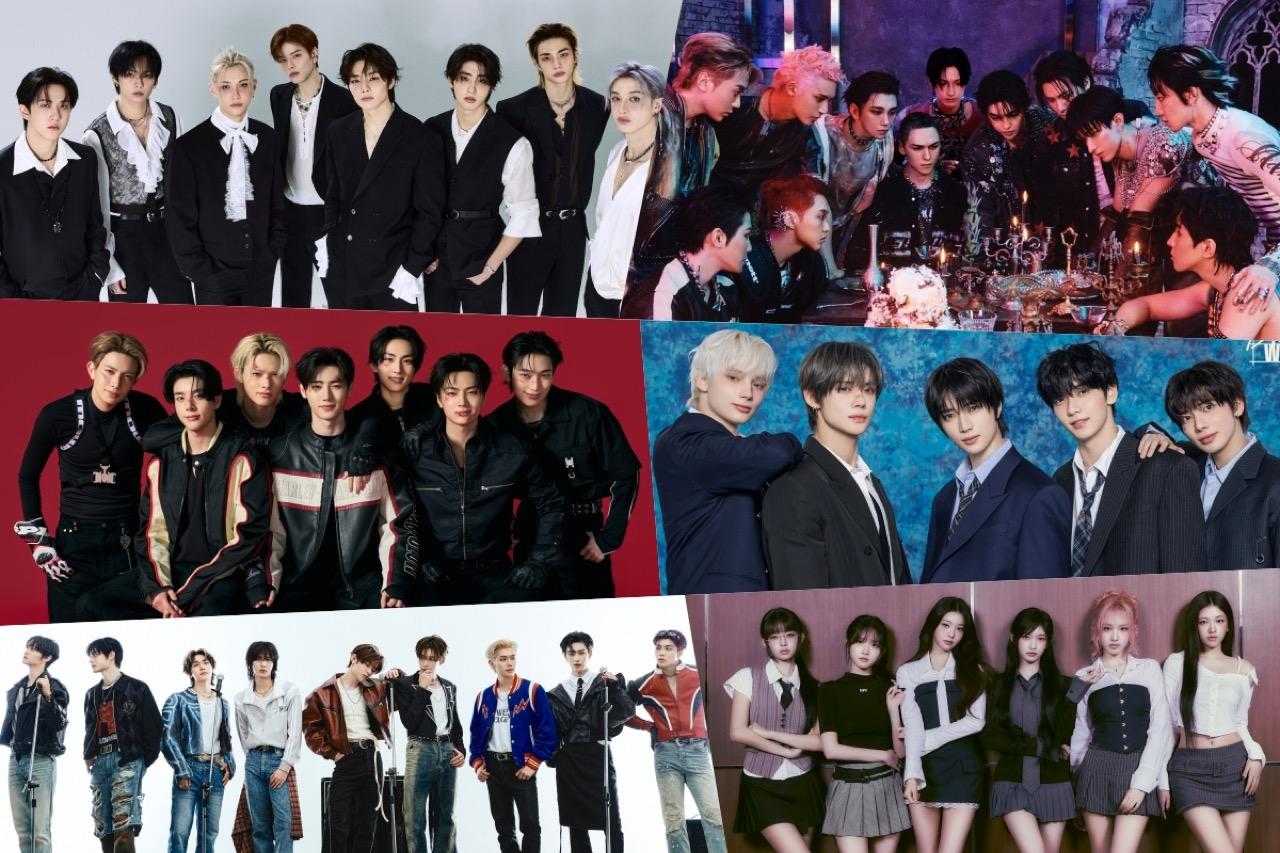
Behind them, the chart reads like a who's who of fourth-gen K-pop. HYBE's roster dominated: SEVENTEEN's HAPPY BURSTDAY at #3, ENHYPEN's DESIRE : UNLEASH at #4, TXT's The Star Chapter: TOGETHER at #6, and ZEROBASEONE's Never Say Never at #7. IVE landed at #9 with IVE Empathy, and G-Dragon's solo comeback Ubermensch closed out the top 10.
The dominance didn't stop there. Five more Korean and Japanese acts filled the top 20, including NCT WISH (#11), RIIZE (#15), and aespa (#16), all from SM Entertainment.
The Photocard Economy
The obvious question from anyone outside the K-pop ecosystem: how? The answer lies in a business model that Western labels have largely abandoned.
K-pop albums aren't just music delivery systems. They're collectible packages. A single album release often ships in four, six, sometimes eight different versions, each with unique photobooks, random photocards, and exclusive inclusions. Fans buy multiples to collect their favorite member's photocard or to complete a set. Some releases include fan sign lottery entries tied to album purchases, incentivizing bulk buying through authorized retailers.
This isn't a secret. It's the foundation of K-pop's physical sales machine. And it works at a scale that makes the rest of the industry look like it forgot albums exist.
The IFPI Global Album Sales Chart tracks physical copies and paid digital downloads only. No streaming. In this format, K-pop's collectible-driven model is essentially unbeatable. Western artists, with rare exceptions like Swift, have shifted almost entirely to streaming-first strategies. They're playing a different game.
But Does Sales Dominance Tell the Full Story?
Here's where it gets complicated. The IFPI also publishes a Global Album Chart that factors in streaming alongside sales. On that chart, the picture shifts significantly.
Swift still leads. But positions #2 through #5 belong to Morgan Wallen, the KPop Demon Hunters soundtrack, Bad Bunny, and Sabrina Carpenter. Stray Kids drops to #6. SEVENTEEN falls to #12. ENHYPEN to #16. Rosé's rosie appears at #19, but that's partly a streaming play given her BLACKPINK crossover appeal.
The gap between sales chart dominance and streaming chart performance reveals an uncomfortable truth: K-pop's album numbers, while genuinely massive, don't always correspond to proportional listening habits. A fan who buys eight versions of an album to collect photocards counts as eight sales but is still one listener. Meanwhile, Morgan Wallen's fans stream his tracks billions of times without ever touching a physical disc.
Neither metric tells the complete story. But the disconnect is worth acknowledging, especially as the industry debates what "success" actually means in 2026.
The HYBE Factor
Look at the chart again and one company stands out. HYBE placed four acts in the top 10: SEVENTEEN (#3), ENHYPEN (#4), TXT (#6), and ZEROBASEONE (#7). That's an extraordinary concentration of market power from a single entertainment conglomerate, and it happened while BTS, HYBE's biggest act, was still completing military service commitments throughout much of 2025.
BTS's absence from the 2025 charts is the dog that didn't bark. The group that essentially built HYBE into a publicly traded empire wasn't releasing albums, yet the company's other acts filled the vacuum. Now that BTS is back with their comeback album Arirang and a historic Gwanghwamun concert on the books, 2026 could see HYBE's chart presence become even more overwhelming.
The Generational Shift
Something else worth noting about this chart: it's almost entirely fourth-generation groups. Stray Kids (debuted 2018), SEVENTEEN (2015), ENHYPEN (2020), TXT (2019), ZEROBASEONE (2023), IVE (2021). The only legacy act in the top 10 is G-Dragon, whose Ubermensch marked his first solo album in eight years and rode the wave of BIGBANG's ongoing cultural relevance.
The second and third-gen titans that defined K-pop's global breakout, including BTS and BLACKPINK, were largely absent from the sales conversation in 2025. That changes this year. BTS is back. BLACKPINK members are active across solo and group projects. If the fourth gen dominated 70% of the top 10 without them, what happens when the full roster is in play?
Sustainable Dominance or Peak Physical?
The skeptic's case: K-pop's album sales dominance is propped up by a collectible culture that may not sustain indefinitely. As environmental concerns grow around the plastic waste of multi-version releases, and as younger fans in Korea shift toward digital consumption, the photocard economy could face pressure. Some Korean outlets have already reported declining domestic album sales for mid-tier acts, even as the top groups post bigger numbers than ever.
The bull case: K-pop's model is expanding, not contracting. Japanese and Chinese acts are adopting similar physical release strategies (note &Team at #13, a Japan-based HYBE act). Western artists are experimenting with variant covers and exclusive merch bundles. Taylor Swift's own chart dominance relies partly on the same collector mentality. K-pop didn't invent the playbook. It perfected it.
Either way, the IFPI data makes one thing clear. When it comes to albums, the physical object that the music industry was ready to eulogize a decade ago, K-pop is the last genre standing that treats it as the primary product. And the sales numbers prove that millions of fans worldwide still want something they can hold.